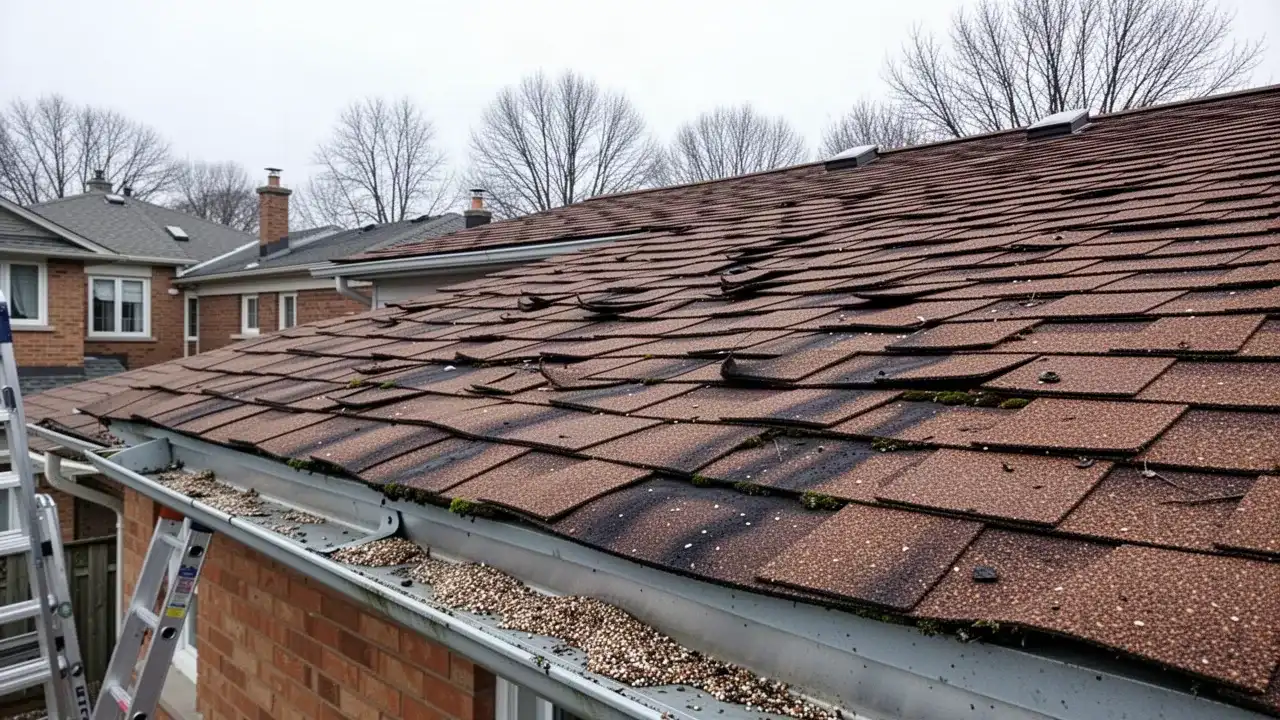
Curling asphalt shingles on aging Burlington home roof
Roofing guide

Repair or Replace Your Roof? A Burlington Homeowner's Checklist

Knowing when to replace a roof, and when a repair will do, is the most common question we hear after a leak. Our roofers at Fixall Roofing answer it for homeowners across Burlington and the surrounding area after looking at the roof itself, and the right answer is not always the more expensive one.

A single storm-damaged slope or a cracked vent boot on a 10-year-old roof is a repair. Repeat leaks, curling shingles on every slope and soft decking on a roof that is already two layers deep point the other way.

This checklist walks through the factors a roofer weighs, the signs you need a new roof that you can check yourself, and how insurance and resale plans change the math. Use it to go into any quote, ours included, knowing what to ask.

  • 15+ years experience
  • 700+ jobs completed
  • Fully insured + WSIB
  • Working at Heights certified
  • 1-year labour warranty
  • Open 24/7

The Quick Checklist

Score your roof against each row. If most of your answers land in the right-hand column, replacement is usually the better long-term spend.

FactorPoints to repairPoints to replace
Roof ageLaminated shingles under about 15 yearsLaminated past 20 to 25 years, three-tab past 15 to 20
Area affectedOne slope or a small patchWear or damage on several slopes
LayersOne layer on a sound deckTwo layers already in place
LeaksOne leak with a clear causeRepeat leaks in different spots
Granule lossLight and localHeavy in eavestroughs, bare patches showing
Deck conditionFirm underfootSoft, sagging or rotted sheathing
Plans to sellSound roof, sale within a yearRoof near end of life before listing

Age is a guide, not a verdict. Burlington roofs on exposed lots near the lake or the escarpment brow often age faster on their windward and south-facing slopes than the same shingle in a sheltered spot.

When a Repair Makes Sense

A repair is the right call when the damage is localized and the rest of the roof has years of life left. Typical examples are a few shingles torn off by a west wind, a cracked rubber boot around a plumbing stack, nail pops, or a chimney where the flashing has pulled away from the brick.

Good roof repair work fixes the cause, not only the symptom. That means tracing the water path from the attic, replacing failed flashing with new step and counter-flashing rather than smearing on sealant, and matching the shingle as closely as the current product lines allow.

Winter damage deserves a closer look. An ice dam that lifted shingles along one eave can be repaired with new membrane and shingles, but if ice dams return every winter, the real problem is usually attic ventilation or air leaks from the house, and fixing those protects whichever roof you end up with.

Our rule of thumb: if a repair costs less than about a quarter of a replacement and the roof is in the first half of its life, repair it. Past that point, you are often paying to patch a roof you will replace within a few years anyway.

When Replacement Is the Smarter Spend

Replacement wins when wear is spread across the roof rather than concentrated in one place. Curling or cupped shingles on several slopes, cracked tabs and widespread granule loss all mean the shingles themselves are finished, and patching one area just moves the next leak somewhere else.

Repeat leaks are another signal, especially in different spots over a couple of seasons. So is a roof that already has two layers: in Burlington, a third layer falls outside the City's permit exemption, and a full tear-off is the honest fix anyway because it exposes the deck.

Deck problems settle the question. Soft spots, sagging between rafters or rotted sheathing at the eaves mean the boards must come off, and that only makes sense as part of a full roof replacement with new underlayment, eave protection and ventilation.

Replacement is also the moment to reconsider material. If you plan to stay in the house for decades, our guide to metal roof vs shingles sets out the cost, lifespan and noise trade-offs.

Signs You Need a New Roof

You can spot most of the warning signs yourself without climbing onto the roof. Check twice a year, in spring and after the leaves fall, and after any major wind storm.

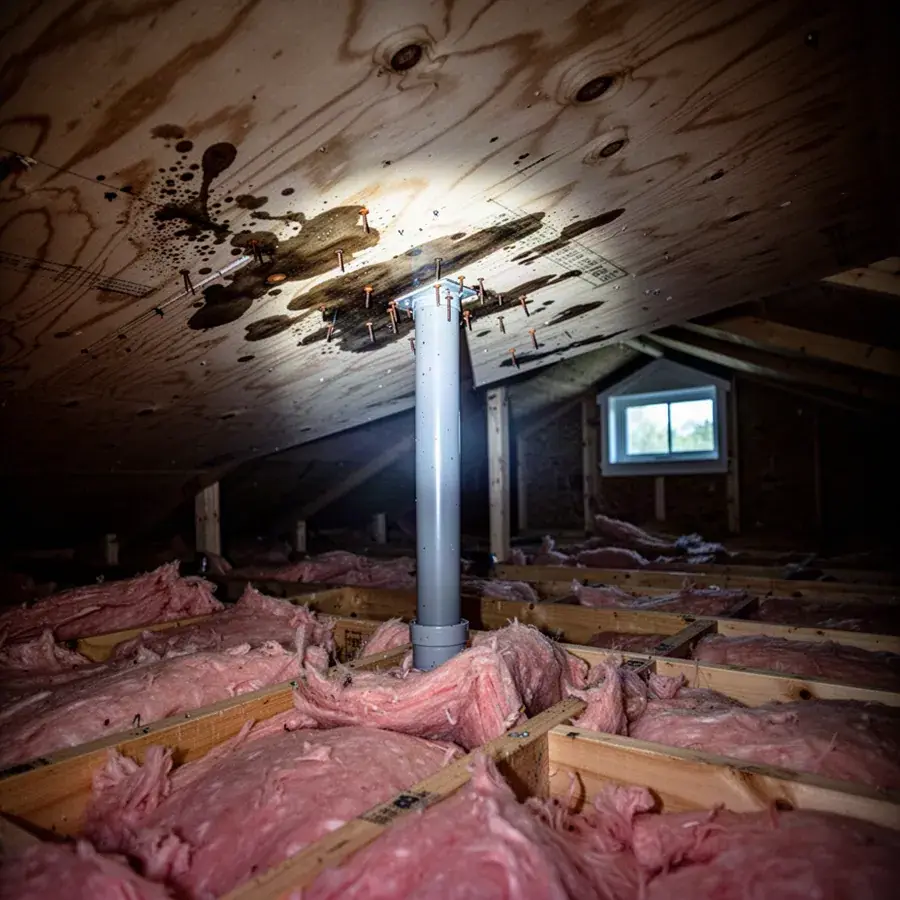
Attic sheathing water stains found during Burlington roof check

What to Look for in the Attic

On a sunny day, turn off the attic light and look for daylight through the roof boards, especially around chimneys and vents. Dark rings, water stains or rusty nail tips on the underside of the sheathing mean water or condensation has been reaching the deck.

In winter, frost on the nails or the underside of the sheathing points to a ventilation or air-sealing problem. Damp or compressed insulation and a musty smell are worth a professional look before they become mould.

  • Daylight through boards or around penetrations
  • Stains, dark rings or rusty nails on the sheathing
  • Frost on nail tips in cold weather
  • Damp insulation or a musty smell

What to Look for from the Ground

Use binoculars and walk around the whole house. Curling edges, cupped shingles, missing tabs and patches of a different colour all signal a roof near the end of its life.

A dip along the ridge or between rafters suggests a deck or framing problem. Thick moss on shaded slopes and handfuls of granules in the eavestrough at the downspouts are other signs the shingle surface is breaking down.

  • Curling, cupping or missing shingles
  • A sagging ridge line or wavy roof plane
  • Heavy moss on north-facing slopes
  • Granules piling up at downspouts

Insurance and Resale Considerations

Many Ontario home insurers ask for the age of your roof at renewal or when you switch providers. Some apply conditions to older roofs, and some policies pay depreciated value rather than full replacement cost for an aging roof, so read your policy wording or ask your broker.

Insurance usually covers sudden damage such as a tree limb through the roof or shingles torn off in a wind storm, not gradual wear. If a storm damages an already worn roof, the adjuster may pay for the damaged area only, which can leave you deciding whether to top up for a full replacement.

When selling, the buyer's home inspector will estimate the roof's remaining life and the buyer will price that in. A roof with five years left often costs you more in negotiation than a credit would, while a recent replacement with receipts and the manufacturer's warranty paperwork is an easy selling point.

Whatever you decide, keep records. Dated photos, invoices that list the shingle product and the year installed, and any inspection reports make insurance renewals, claims and a future sale much smoother.

Get a Second Opinion Before You Spend

If one contractor has told you the whole roof must go and you are not convinced, get a second opinion. An honest roof inspection should include photos of the problem areas, a check of the attic and decking where accessible, and a clear explanation of why a repair will or will not hold.

Be cautious of a quote that arrives without photos, pushes a same-day signature or gives one lump-sum price with no detail. Those are signs the recommendation may be driven by the sale rather than the roof.

We will tell you when a repair is enough, even when that is the smaller job. If replacement is the better spend, your written quote will show the deck allowance, ventilation changes and flashing work line by line.

  • Which specific defects make a repair unreliable?
  • How much decking is included in the price, and what does extra cost per sheet?
  • Will the old layers be fully removed down to the deck?
  • What ventilation and flashing changes are included?
  • Who covers labour if a leak appears in the first year?

Repair or Replace FAQs

How do I know if I need a repair or a full replacement?

Look at age, how widespread the damage is and the condition of the deck. Localized damage on a roof under about 15 years old is usually a repair, while widespread curling, repeat leaks, two existing layers or soft decking usually mean replacement.

Can I replace only half of my roof?

Yes, replacing a single worn or damaged slope is possible, and it can make sense when one face takes most of the sun or wind. The catch is matching, since older shingle colours get discontinued and new shingles will look different from weathered ones for years, and the transition at the ridge needs careful detailing.

Request a quote

Book an Honest Roof Assessment

Tell us the age of your roof, what you have noticed and whether you are planning to sell. We will inspect it, photograph what we find and give you a written recommendation, repair or replace, with the reasons.

Phones answered 24/7, including emergencies.

  1. 1We call you back to confirm the details.
  2. 2We inspect the roof and attic and take photos.
  3. 3You get a written scope and price. No pressure.
Call 289-816-1772Get a Quote