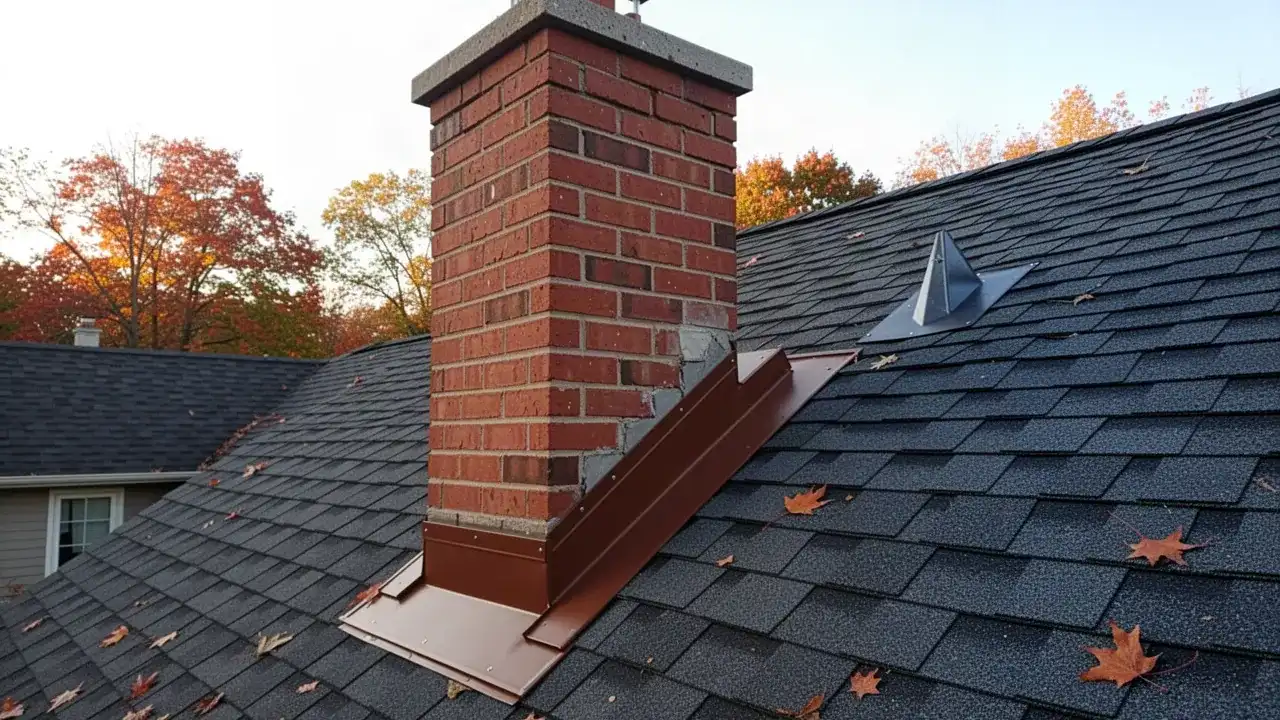
Roof and Chimney Flashing Repair in Burlington, ON
Chimney flashing repair in Burlington is one of the jobs we are called for most, because failed flashing is among the most common leak sources we find when we trace water back to where it enters. Our Burlington crew at Fixall Roofing installs and repairs roof flashing wherever a roof meets something else: chimneys, dormer and second-storey walls, skylights, plumbing vents and the roof edges themselves.
Homes with brick chimneys, walls rising off a lower roof, dormers or skylights all depend on flashing to stay dry. When it fails, the water often shows up well away from the cause, along a wall, beside a chimney chase or hidden behind the siding.
The decision on each visit is whether one failed piece can be refitted or whether the whole chimney or wall needs new metal. Either way, the fix is metal lapped in the right order, not another bead of sealant.
- 15+ years experience
- 700+ jobs completed
- Fully insured + WSIB
- Working at Heights certified
- 1-year labour warranty
- Open 24/7
Chimney and Roof Flashing Installation and Repair
Our flashing work falls into three groups. New flashing goes in with every reroof, repairs fix a specific failed piece, and full replacement rebuilds all the metal around a chimney, wall or skylight when the old pieces are past saving.
Step flashing, counterflashing, aprons, saddles and kick-outs are bent on a sheet metal brake to the exact dimensions of your roof. Custom-bent metal sits tighter and lasts longer than generic stock pieces forced into place with hand tools.
Chimney leaks are often blamed on the shingles or the brick. Our roof leak repair process traces the water to its real source first, which tells us whether flashing, masonry or something else is at fault.
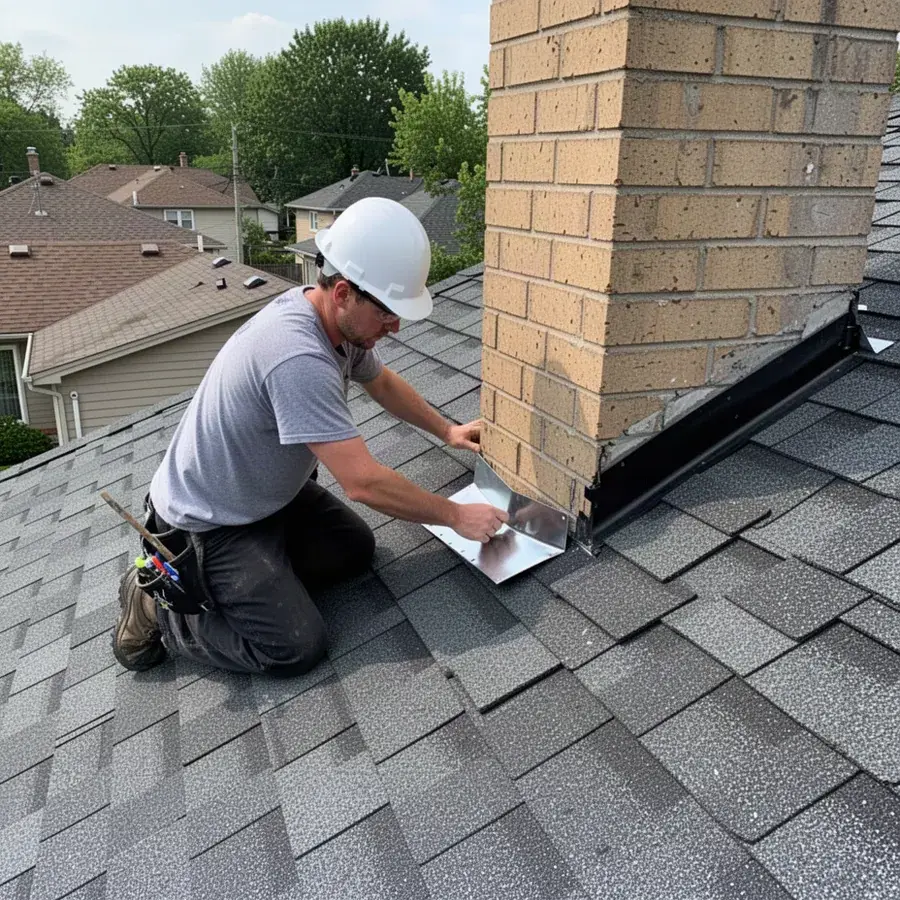
Types of Roof Flashing
Each piece of flashing has one job, and each fails in its own way. Knowing which piece is leaking is half the diagnosis.
| Flashing | Where it goes | How it fails |
|---|---|---|
| Step flashing | Sidewalls and chimney sides, one piece per shingle course | One long strip used instead, or face-nailed and caulked |
| Counterflashing | Over step flashing, set into mortar joints or behind cladding | Pulls out of mortar or relies on surface sealant |
| Apron flashing | Low side of a chimney or the base of a front wall | Too short, lifted by ice or poorly lapped |
| Valley flashing | Inside corner where two slopes meet | Worn through, nailed near the centre, clogged with debris |
| Drip edge | Along eaves and rake edges | Missing, bent or lapped the wrong way with underlayment |
| Kick-out flashing | Bottom of a roof-to-wall joint | Missing, so water runs behind the siding |
| Pipe boots | Around plumbing stacks and vent pipes | Rubber collar cracks from sun exposure |
Skylights rely on their own manufacturer flashing kits, such as Velux EDL kits for shingle roofs. Our skylight flashing service covers resealing and replacing those kits on older units.
Chimney Flashing Done Properly
Proper chimney flashing has two layers. Step flashing is woven into the shingles up each side, one piece per course, so each piece sheds water onto the shingle below it.
Counterflashing then covers the top edges of the step flashing. We grind a reglet into the mortar joints, set the bent lip of the metal into it and seal it, so the metal is anchored in the masonry rather than glued to the brick face.
On the low side, a one-piece apron wraps the front of the chimney. On the high side, water and snow pile against the brick, so wider chimneys need a cricket, also called a saddle, that splits the flow around both sides.
The Ontario Building Code (Section 9.26) calls for a chimney saddle where the upper side of a chimney on a sloping roof is more than 750 mm wide, unless the flashing meets an alternative set of height requirements. We frame the cricket, sheath it, cover it with self-adhered membrane and flash it in metal.
Kick-Out Flashing and Hidden Wall Leaks
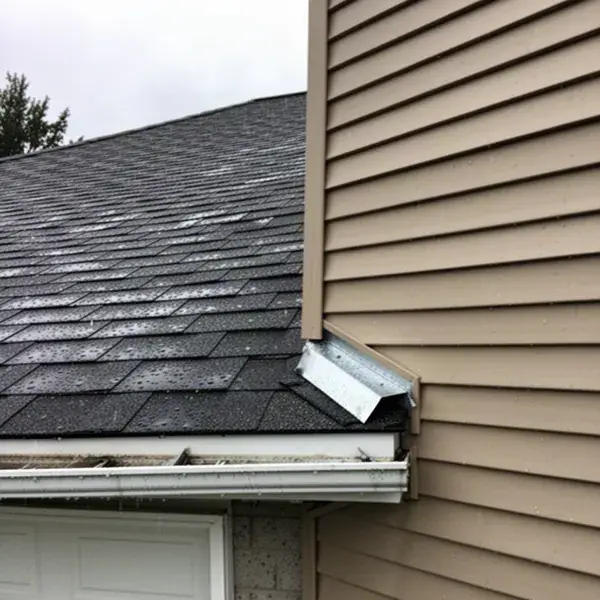
A kick-out is a small angled piece of metal at the bottom of a roof-to-wall joint, where the roof edge stops but the wall carries on. It throws water away from the wall and into the eavestrough instead of letting it run down behind the siding or stucco.
Without one, every rainfall sends a stream of water down the same spot on the wall. The damage stays hidden behind vinyl or stucco until the sheathing and framing turn soft, and it often turns up below garage and porch roofs that tie into a two-storey wall.
This detail was frequently left out on homes built through the 1990s and 2000s, including many of the subdivision homes built across Halton in that period. A brown stain or soft spot on the wall below a roof edge is the usual giveaway.
Adding a kick-out to an existing roof means lifting the bottom shingles and siding at the joint, fitting the new piece behind the wall's weather barrier and closing it back up. If the wall behind is already soft, we show you before anything is covered.
Flashing Materials: Aluminum, Galvanized Steel and Copper
Pre-painted aluminum is our everyday choice for step flashing, counterflashing and aprons. It bends cleanly, does not rust, comes in colours that match the trim and lasts for decades on an asphalt roof.
Galvanized steel is stiffer and resists denting, which suits valleys, larger chimney pans and spots that see foot traffic. Its zinc coating wears over time, so we usually install it pre-painted.
Copper costs several times more but can outlast the roof covering, and it weathers to a patina that suits older brick homes. It is the standard choice on slate roofs and heritage work, where the roofing itself can last far longer than aluminum would.
The metals have to be compatible. Runoff from copper corrodes aluminum and galvanized steel, and aluminum should not sit directly against fresh mortar or pressure-treated wood without a separating layer.
Why Caulk Is Not Flashing
A thick bead of sealant is the flashing repair we undo most often. It looks tidy on day one, but roof sealants shrink, harden and pull away after a few seasons of sun and freeze-thaw cycles, and the gap they leave lets water straight back in.
Caulk also hides the real defect. If step flashing is missing or counterflashing was never cut into the mortar, sealant over the top only delays the next leak, often until the deck below has started to rot.
We use sealant only where it belongs, as a secondary seal in a reglet or over a fastener head. The primary waterproofing always comes from metal lapped so water runs over it, not through it.
Replace Flashing When You Replace the Roof
Some crews reuse the old step flashing during a reroof to save an hour or two at each wall and chimney. Old step flashing is often bent, corroded or riddled with nail holes, and the new shingle courses rarely line up with it properly.
On every roof replacement we install new step flashing, aprons, valley metal, drip edge and pipe boots as standard. Counterflashing in sound condition can sometimes stay, and we tell you honestly when it can and when it cannot.
If you are weighing a targeted roof repair against a full reroof, the state of the flashing is part of the answer. New shingles fitted around tired metal leave the weakest part of the roof unchanged.
Flashing Repair FAQs
How do I know if my chimney flashing is leaking?
Inside, look for water stains on ceilings or walls beside the chimney chase, peeling paint or bubbling drywall nearby, and damp or darkened framing around the chimney in the attic. Outside, warning signs include sealant pulling away from the brick, counterflashing lifting out of the mortar and rusted or bent metal.
How much does chimney flashing repair cost?
As a general estimate for the Burlington area, refastening or resealing a small section often costs a few hundred dollars, while fully reflashing a typical chimney commonly falls in roughly the $800 to $2,500 range. A wider chimney, a steep or high roof, copper instead of aluminum and adding a cricket all raise the price. A written quote follows an on-site look.
Do you repair chimney brick and mortar too?
We are roofing specialists, so our work covers the flashing, cricket and roofing around the chimney rather than the masonry itself. If we find a cracked crown, spalled brick or failing mortar, we photograph it and recommend bringing in a mason, then install the new flashing once the masonry is sound.
Fix Your Flashing Before the Next Storm
Tell us where the water is showing up and we will inspect the flashing, photograph what we find and give you a written quote. If water is coming in right now, our line is answered 24/7.
Flashing repairs and replacements carry our 1-year labour warranty, plus the manufacturer's warranty on the metal and membranes we install.
Phones answered 24/7, including emergencies.
- 1We call you back to confirm the details.
- 2We inspect the roof and attic and take photos.
- 3You get a written scope and price. No pressure.