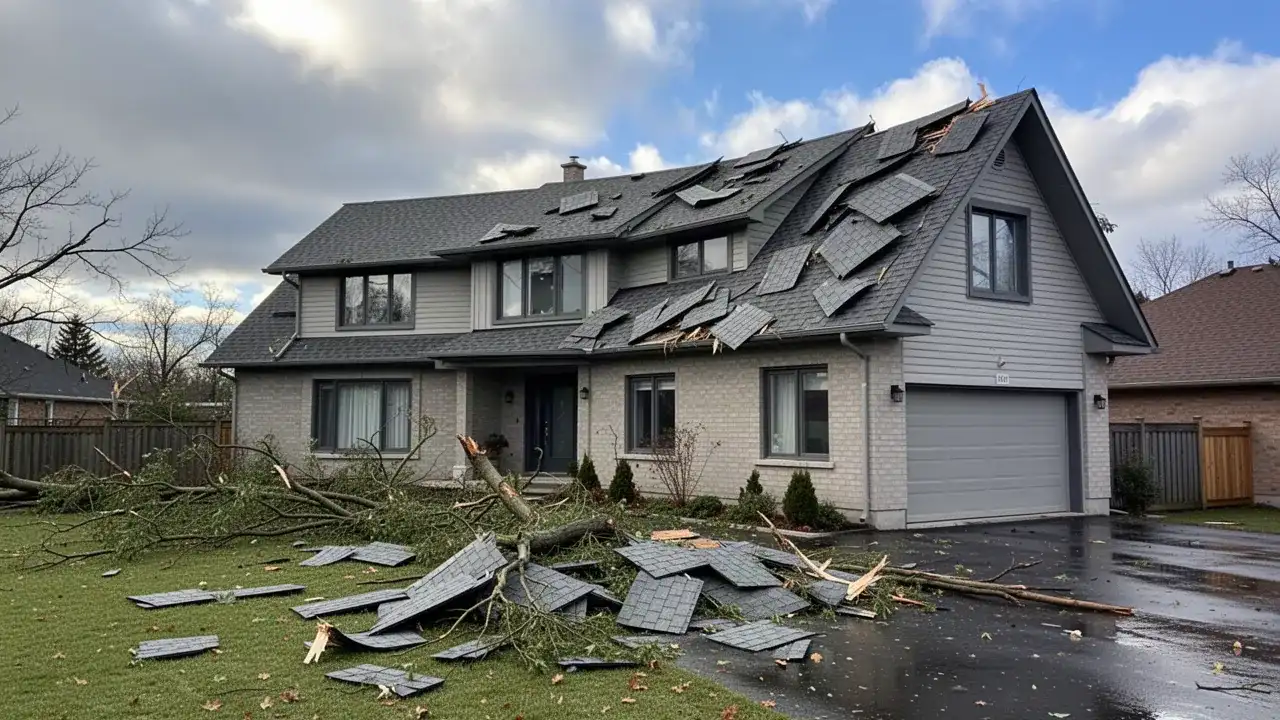
Wind damaged shingles on Burlington roof after storm
Residential roofing

Storm and Hail Damage Roof Repair in Burlington, ON

Storm damage roof repair in Burlington involves two jobs at once: fixing the roof and giving your insurer the evidence it needs to process a claim fairly. Fixall Roofing is a Burlington roofing contractor that handles both, from the first dated photo to the last replaced shingle.

We work for homeowners and building owners after wind damage roof events, hail, and fallen trees or branches. With the lake on one side and the escarpment on the other, Burlington gets strong gusts that regularly test shingles along exposed rakes and ridges.

The hardest part after a storm is often knowing whether the damage is new enough, and serious enough, to claim. We give you straight answers about what insurance is likely to cover and what it is not.

  • 15+ years experience
  • 700+ jobs completed
  • Fully insured + WSIB
  • Working at Heights certified
  • 1-year labour warranty
  • Open 24/7

Storm and Hail Damage Roof Repair: What the Service Covers

Storm work follows a set order: inspect, protect, document, then repair. Skipping straight to repairs can leave you without the evidence an adjuster needs, while waiting too long to protect the roof can turn a covered claim into a denied one.

A post-storm roof inspection separates fresh damage from older wear, which is the question your insurer cares about most. If the roof is open to the weather, our emergency tarping crew covers it first, and the rest of the process waits for safe conditions.

Permanent work ranges from replacing a handful of torn shingles to a full roof replacement when damage is spread across several slopes or the existing shingles are too brittle to repair without breaking more.

Types of Storm Damage We See

Storm damage is not always obvious from the driveway. These are the four kinds we document most often after Burlington storms, with the signs that give each one away.

Wind Damage: Lifted, Creased and Missing Shingles

When a gust folds a shingle back, it often settles flat again with a horizontal crease across it. From the ground the roof looks fine, but the creased shingle has lost its seal and will tear off in the next strong wind.

We check each slope by hand for creases, broken seals and nails pulled through the mat, and photograph every damaged shingle with its location.
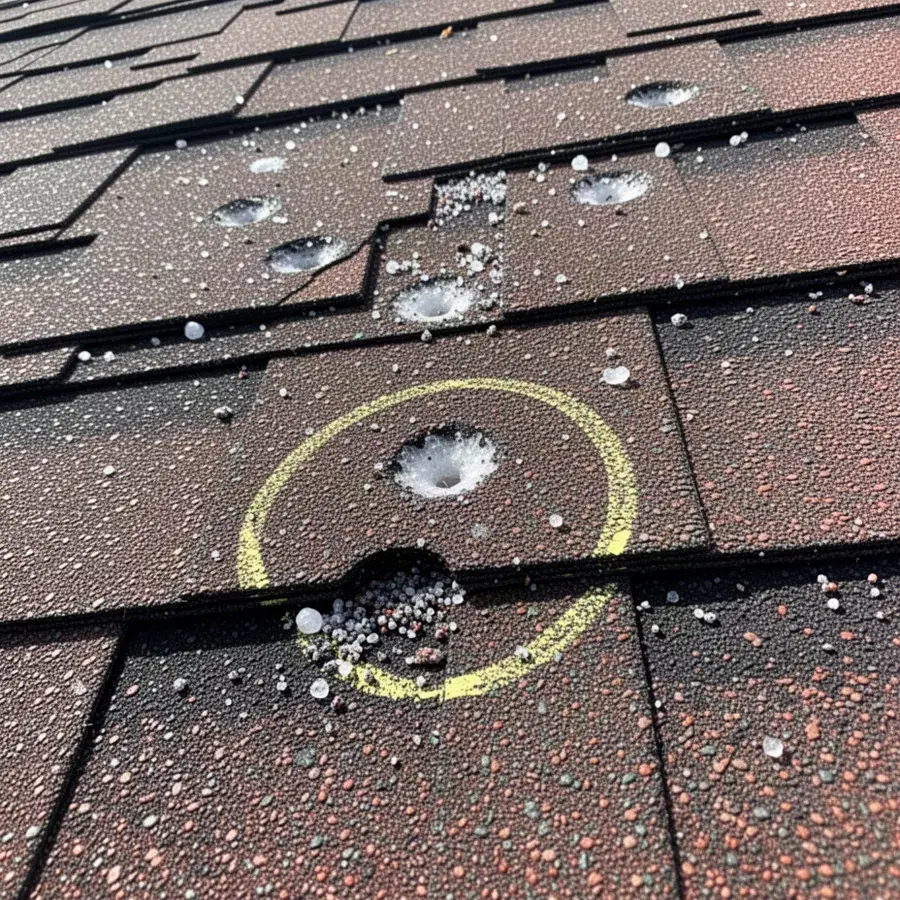
Hail Damage: Bruising and Granule Loss

On asphalt shingles, hail leaves dark circular marks where granules were knocked off, and some hits fracture the mat underneath even when the surface looks intact. On metal roofs it dents panels, and on skylights it can crack domes and glazing.

Hail damage on shingles can take months to leak. Exposed asphalt breaks down in sunlight and fractured mats split through freeze-thaw, which is why an inspection soon after the storm matters even if nothing drips.

Fallen Trees and Branch Impact

A large branch can crack rafters, break the ridge board or punch through the deck. Once the tree is safely removed, we check the framing from the attic for cracked or displaced members before any roofing goes back on.

Structural damage may need rafters sistered or replaced, and in serious cases an engineer's review and a building permit, before the roof can be closed up.

Water Intrusion After Heavy Rain

Intense downpours can overwhelm eavestroughs and push water back under the drip edge, or find small gaps in flashing that stay dry in normal rain. Troughs pulled loose or bent by wind, ice or branches need eavestrough repair alongside the roof work.

We document where the water entered and what it reached inside, since that record supports the interior part of your claim.

After the Storm: Your First Steps

The steps you take in the first day or two decide how smoothly a claim goes. This checklist is built around claim readiness.

  • Stay safe. Keep off the roof and away from downed wires, and let the hydro utility handle any tree touching a line.
  • Photograph before anything moves. Capture the roof from the ground, debris in the yard, and every damaged area inside.
  • Note the date and time of the storm. Weather warnings issued for Burlington that day help confirm the event.
  • Protect the property. Arrange tarping or temporary repairs and keep every receipt, since most policies require reasonable steps to limit further damage.
  • Call your insurer. Open the claim, write down the claim number and ask whether an adjuster will attend.
  • Call a roofer for documentation. A dated inspection report gives the adjuster a clear, itemized record.
Hail bruised asphalt shingles on Burlington roof

Roof Insurance Claims: How We Help

We do not act as your insurer or your adjuster, and we do not negotiate your settlement. What we do is give you and the adjuster an accurate picture of the damage so the roof insurance claim is decided on facts.

Documenting Damage for Your Adjuster

You receive a dated photo report with each damaged area located on a simple roof plan, measurements of the roof, and a written scope of the repair or replacement needed. The report notes the age and type of the existing shingles, which adjusters ask about first.

Meeting the Adjuster on Site

If you want us there, we walk the roof with the adjuster and point out the damage we documented. Disagreements about scope are easier to settle on the roof than over the phone weeks later.

What Insurers Look At: Age and Condition

Insurers generally cover sudden damage from a specific event, not wear and tear that built up over years. An older roof may be paid out on a depreciated basis or limited by the policy, and some policies treat cosmetic hail dents on metal differently from damage that affects performance.

Every policy is different, so read your wording or ask your broker before assuming what is covered.

Why We Never Inflate a Claim or Waive a Deductible

Some contractors offer to cover your deductible by padding the invoice to the insurer. That is insurance fraud, and it puts the homeowner at risk as well as the contractor.

Our reports describe only the damage we found and our invoices show the work we did. You pay your deductible, and the claim stays clean.

How to Spot a Storm Chaser

After a major storm, out-of-town crews knock on doors across affected neighbourhoods. Some do acceptable work, but many are gone before the first warranty problem appears.

Under Ontario's Consumer Protection Act, a contract you sign at your own door generally comes with a 10-day cooling-off period, so you can cancel in writing without penalty during that time. Before hiring anyone, ask for a local address, proof of liability insurance and a WSIB clearance certificate, and get competing written quotes.

  • Unsolicited door-knocking right after a storm, often with an offer of a free inspection
  • Out-of-province licence plates and no local address or phone number
  • Pressure to sign today, or to sign a direction to pay your insurance money straight to them
  • Requests for cash or a large deposit before any materials arrive
  • Promises that insurance will pay for a whole new roof before anyone has seen the policy

Storm Damage FAQs

Does home insurance cover storm damage to a roof?

Most Ontario home policies cover sudden damage from wind, hail and falling trees, but not gradual wear, poor maintenance or old age. Check your policy wording or ask your broker, since deductibles, exclusions and roof-age limits vary.

Will insurance cover a 20-year-old roof in Ontario?

It depends on your policy and the roof's condition. Some insurers pay older roofs on a depreciated basis, limit coverage or require an inspection at renewal, while others still cover sudden storm damage if the roof was in reasonable shape before the event.

How soon should I report roof damage to my insurer?

As soon as possible, ideally within a day or two of the storm. Policies set notice requirements, and late reporting makes it harder to prove the damage came from that event rather than from later weather or neglect.

Request a quote

Book a Storm Damage Inspection

Reach us by phone or through the quote request with your address, the date of the storm and what you have noticed so far. We book an inspection, protect the roof if needed, and send a dated photo report you can forward to your insurer.

Phones answered 24/7, including emergencies.

  1. 1We call you back to confirm the details.
  2. 2We inspect the roof and attic and take photos.
  3. 3You get a written scope and price. No pressure.
Call 289-816-1772Get a Quote