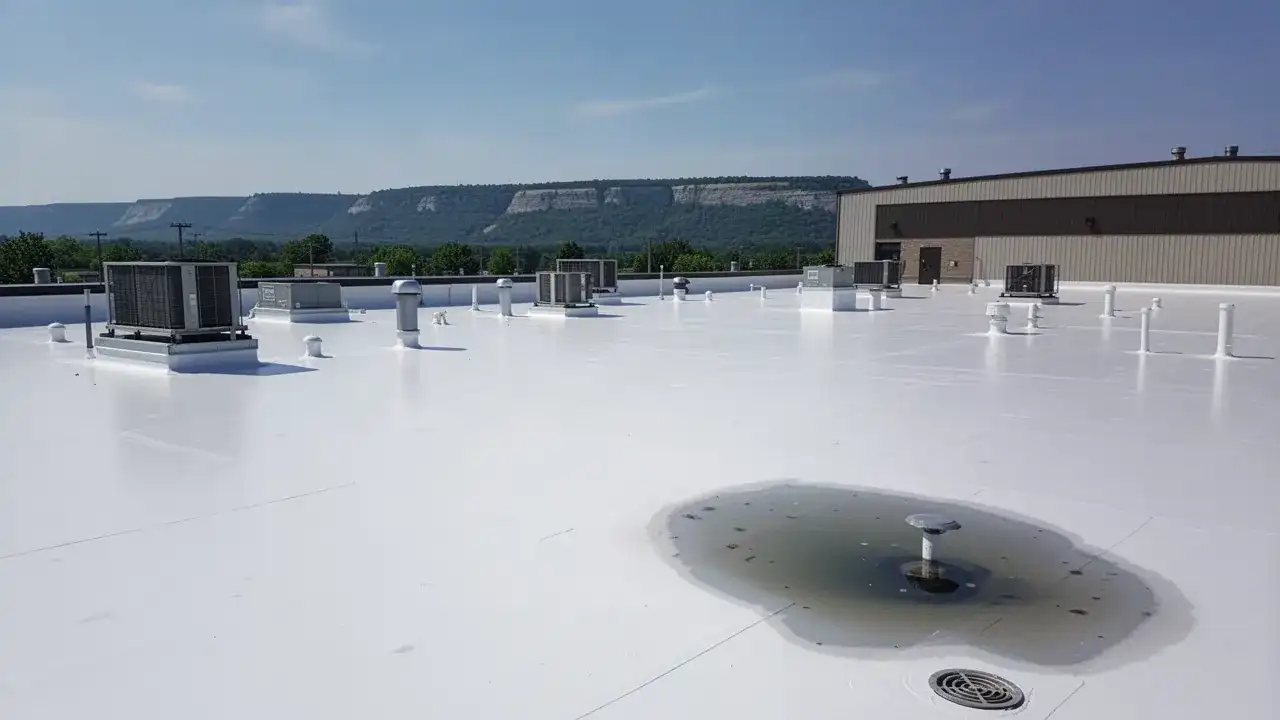
Commercial Roof Coating and Restoration in Burlington, ON
A commercial roof coating in Burlington can add years of service to an aging membrane or metal roof without the cost, noise and landfill waste of a tear-off. Fixall Roofing, a Burlington roofing contractor, restores qualifying flat and metal roofs on warehouses, plazas and offices for the owners and property managers who budget for them.
The key word is qualifying. A coating seals in whatever lies beneath it, so wet insulation or a tired deck has to be found and dealt with before a coating is even on the table.
For most owners the real decision is whether to restore now or plan a replacement. This page walks through how we test a roof, which coating chemistry suits which membrane and how the two paths compare on cost and lifespan.
- 15+ years experience
- 700+ jobs completed
- Fully insured + WSIB
- Working at Heights certified
- 1-year labour warranty
- Open 24/7
Commercial Roof Restoration with Coating Systems
A restoration is more than paint on a roof. It runs from moisture assessment to replacing wet insulation, cleaning and priming, reinforcing seams and flashings, applying the coating to a specified thickness and registering the warranty. Done properly, it leaves a seamless, fully adhered surface with no laps or open seams for water to find its way under.
Coatings suit SBS modified bitumen, built-up, EPDM, some TPO and metal roofs. On older steel buildings, metal roof restoration also deals with rust, failed fasteners and leaking laps before the coating goes on.
This page covers commercial buildings. Homeowners with a low-slope garage, porch or flat-roofed addition can read about residential roof coating instead, where the materials and warranties differ.
Is Your Roof a Restoration Candidate?
Three things decide it: how much insulation is wet, how much life the membrane has left and whether the deck is sound. A commercial roof inspection with an infrared or capacitance survey and confirming cores answers all three.
Small wet areas are normal on an older roof and get cut out and replaced as part of the restoration. When wet insulation covers a large share of the roof, often cited as around a quarter of the area or more, a coating would trap that water, and full replacement is the honest answer.
The membrane type matters as well. EPDM needs its own primer, TPO is slick and only accepts coatings the manufacturer has approved for it, and asphalt roofs need a bleed-blocking base so oils do not stain the topcoat brown.
We will tell you that plainly, even though it means a larger project. A coating over a saturated roof fails within a few seasons, and the money spent on it is lost.
- Good candidates: mostly dry insulation, membrane intact with surface wear, sound deck, positive drainage or manageable ponding
- Poor candidates: widespread wet insulation, membrane split or shrinking from its flashings, corroded deck, repeated structural ponding
Coating Systems for Commercial Roofs
Each coating chemistry suits different substrates and site conditions. We choose from manufacturer systems such as those from GAF, Gaco and Tremco, matched to the existing roof and confirmed by adhesion testing.
| Coating | Best substrates | Ponding tolerance | Cure needs |
|---|---|---|---|
| Silicone | SBS, BUR, EPDM, metal, older spray foam | High | Cures by moisture; works in cooler weather on a dry surface |
| Acrylic | Metal, SBS with bleed-block primer, sloped areas | Low | Needs warm, dry days and no rain or dew until cured |
| SEBS | SBS and BUR asphalt roofs | High | Solvent-based; tolerates cooler temperatures |
| Urethane | Metal, high-traffic areas, base coats | Moderate to high | Strong odour during cure; protect air intakes |
Silicone sheds ponding water best but picks up dirt, and once a roof is coated in silicone, only silicone will bond to it later. Acrylic is economical and very reflective, but on a Burlington roof with low spots it is the wrong product.
A white coating also cuts summer roof surface temperatures sharply, which helps buildings with large cooling loads or temperature-sensitive stock. In a heating-dominated climate like Burlington's, the winter penalty is small because the roof is often under snow.
The Restoration Process
Moisture Survey and Wet Insulation Replacement
Wet areas found in the survey are marked, cut out to the deck and rebuilt with new insulation and membrane. Nothing gets coated until the whole roof reads dry.
Cleaning, Priming and Adhesion Testing
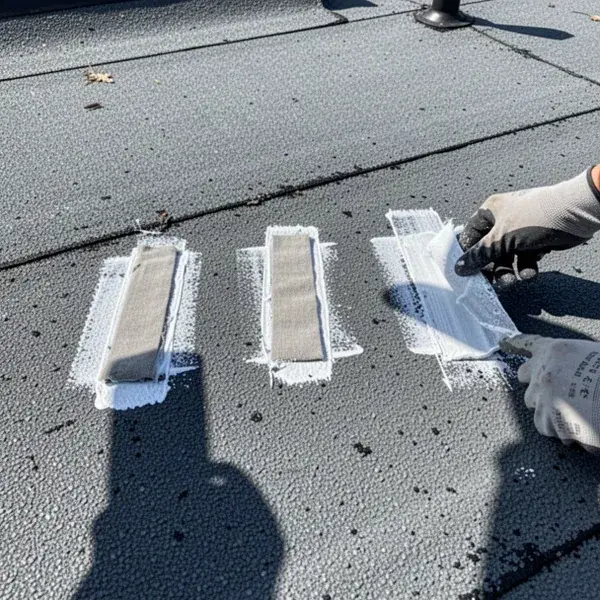
The roof is pressure-washed with the manufacturer's cleaner to remove dirt, chalking and oils. Test patches with embedded fabric strips are pulled after curing to prove the coating and primer bond before full application.
Seams, Fasteners and Flashing Detailing
Seams, laps, fastener heads, curbs and drains are where roofs fail, so each gets a reinforced detail with polyester fabric embedded in a base coat. On metal roofs, loose fasteners are replaced first and rust is treated with a primer.
Application to Specified Thickness
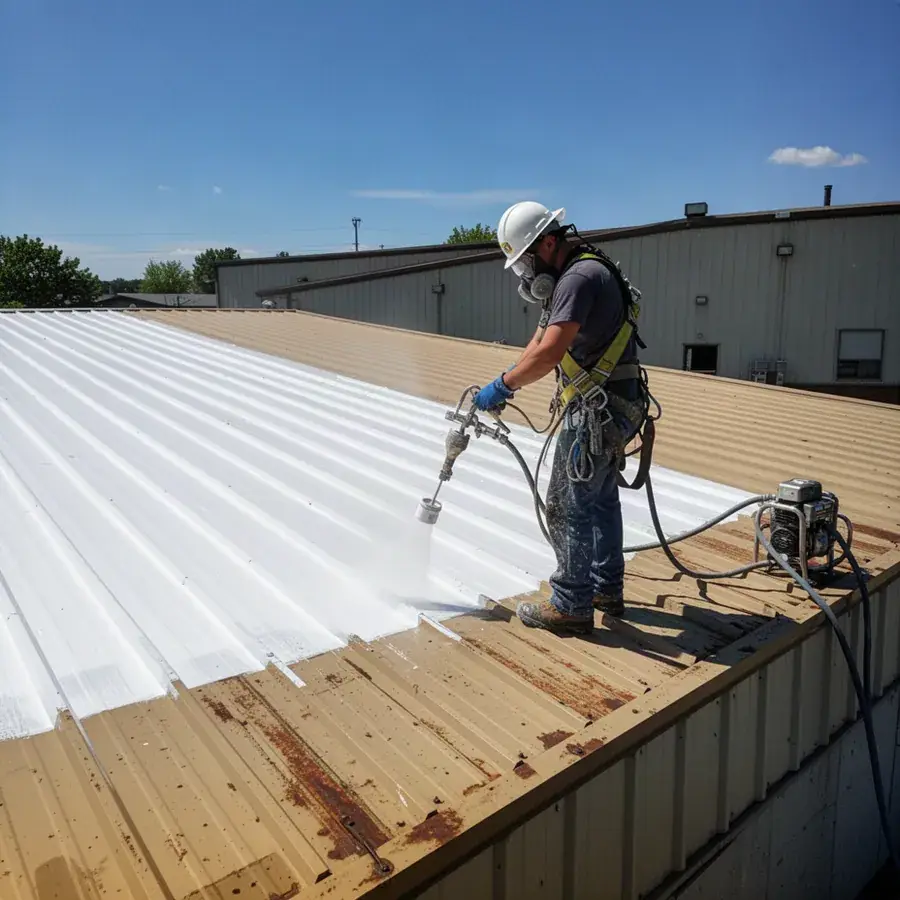
Coating is sprayed or rolled in one or more coats to the dry film thickness the warranty requires. We take wet mil gauge readings across the roof as we go and record them for the warranty file.
Final Inspection and Warranty Registration
Thin spots and missed details are corrected before the manufacturer inspection, where one is required. You receive the warranty, our 1-year labour warranty and a photo record of the work.
Restoration vs Replacement: Cost and Lifespan
On a qualifying roof, restoration typically costs well below a tear-off, often around half or less. Here is how the two compare for a property manager weighing them.
| Factor | Restoration | Replacement |
|---|---|---|
| Upfront cost | Lower, mainly labour and coating | Higher: tear-off, insulation, membrane, disposal |
| Disruption | Little noise, no open roof, short schedule | Tear-off noise, cranes, phased openings |
| Added service life | Typically 10 to 20 years, by thickness | Typically 20 to 30 years or more |
| Future options | Can be cleaned and recoated at term | Full new system; can be coated later |
| Insulation upgrade | Not possible without tear-off | Brought up during replacement |
Warranties and Recoat Cycles
Coating manufacturers commonly offer restoration warranties of 10, 15 or 20 years, and each step up requires more dry film thickness. The warranty term is set at the start, so the coating quantity is quoted to match it.
Most restoration warranties require a pre-job inspection, an approved applicator for the longer terms, a final inspection and regular maintenance with records kept. We confirm in writing which warranty term your roof and our scope qualify for before you sign.
Near the end of the term, a coated roof can be cleaned, repaired and recoated with a new topcoat rather than replaced. Done on schedule, that recoat cycle can keep a sound roof in service far longer than its original membrane would have lasted.
- Annual or semi-annual inspections with written records
- Drains and scuppers kept clear so water does not sit for days
- Punctures and damage repaired promptly with compatible materials
- No new penetrations or equipment without proper detailing
Coating and Restoration FAQs
How long does a silicone roof coating last?
Silicone coatings commonly last 10 to 20 years, depending on the thickness applied and the warranty term chosen. With cleaning and a recoat at the end of that term, the roof can stay in service considerably longer.
Can a coating stop an active leak?
Not on its own. Leaks are traced and repaired first, wet insulation is replaced, and only then does the coating go on as a protective layer.
Can coatings be applied in cold weather?
Each product has a minimum surface and air temperature, and the roof must be dry and frost-free. In Burlington the practical coating season runs from late spring to early fall, with silicone and SEBS stretching it further than acrylic, which needs warm days and nights without dew.
Find Out If Your Roof Can Be Restored
Send us the address, roof size and system if you know them, plus any recent reports. We will arrange a moisture survey and cores and tell you plainly whether restoration or replacement is the better investment.
Phones answered 24/7, including emergencies.
- 1We call you back to confirm the details.
- 2We inspect the roof and attic and take photos.
- 3You get a written scope and price. No pressure.