Roof Sealing and Waterproofing in Burlington, ON
Roof waterproofing in Burlington is often about a few square feet rather than the whole roof: a cracked pipe boot, a parapet cap with open joints, a skylight curb, or a walk-out deck that sits over a bedroom. As a Burlington roofing contractor, Fixall Roofing seals and waterproofs these problem details on homes and small buildings, using the right sealant or membrane for each one.
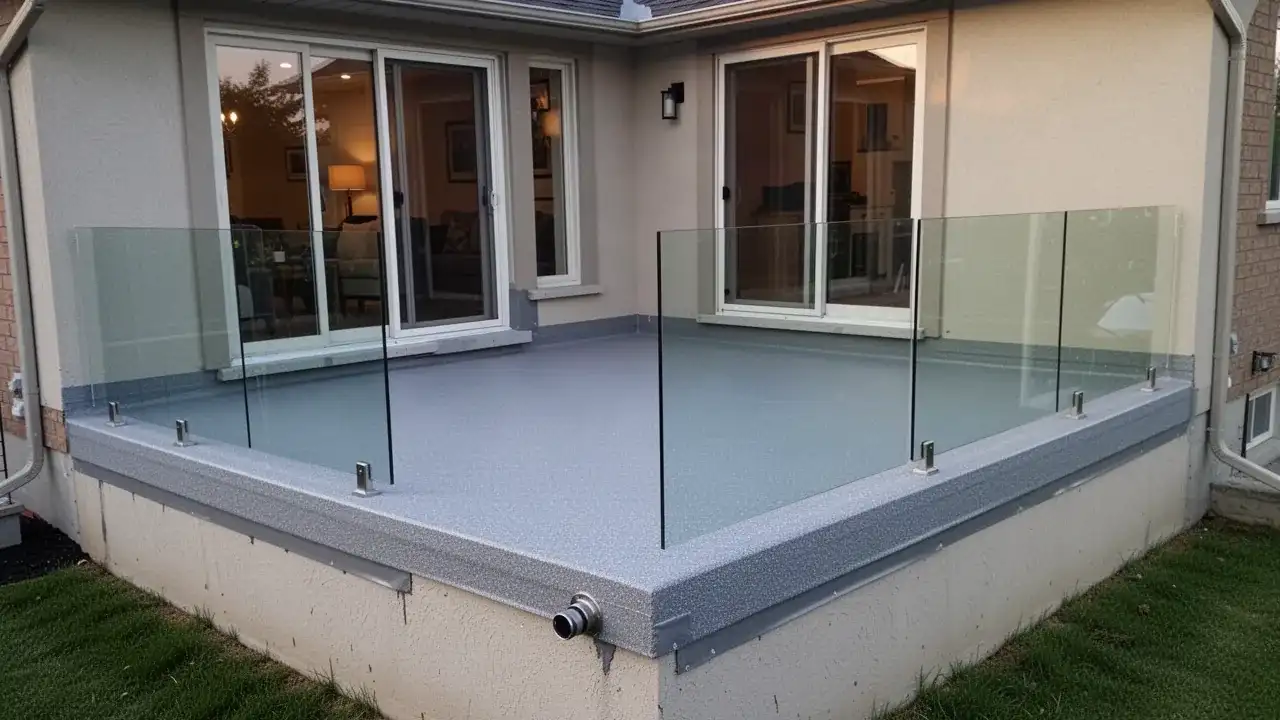
Unlike a roof coating, which renews an entire low-slope surface, targeted sealing fixes one detail at a time. For decks and balconies built over living space, we install liquid-applied waterproofing membranes that people can walk on.
Much of our sealing work is undoing earlier fixes: roofing tar smeared over flashing, caulk layered on caulk, and silicone on surfaces nothing else will now stick to.
- 15+ years experience
- 700+ jobs completed
- Fully insured + WSIB
- Working at Heights certified
- 1-year labour warranty
- Open 24/7
Targeted Roof Sealing and Waterproofing for Problem Details
Most roofs leak at their details, not across their open field. Our work here falls into four groups: sealing penetrations, sealing membrane and metal seams, rebuilding parapet and coping joints, and installing liquid-applied membranes on decks and complex junctions.
Sealant is only as good as the metal and membrane behind it. When a flashing is bent, rusted or too short to lap correctly, no product will hold for long, and the job becomes a flashing repair instead.
Where Roofs Need Sealing
These are the details we find leaking most often on Burlington homes, with how each typically fails and what we use to fix it.
| Detail | Typical failure | Material we use |
|---|---|---|
| Pipe boots and vent stacks | Rubber collar cracks in the sun | New boot, sealed and nailed under the shingle above |
| Satellite and antenna mounts | Lag bolts through shingles sealed only with caulk | Remove unused mounts, patch, or install a flashed mount base |
| Skylight curbs | Sealant dries out, step flashing gaps open | Re-flash with a curb kit, polyurethane only at approved joints |
| Chimney crowns | Cracked mortar crown lets water into the chimney | Crown repair plus a flexible crown sealer |
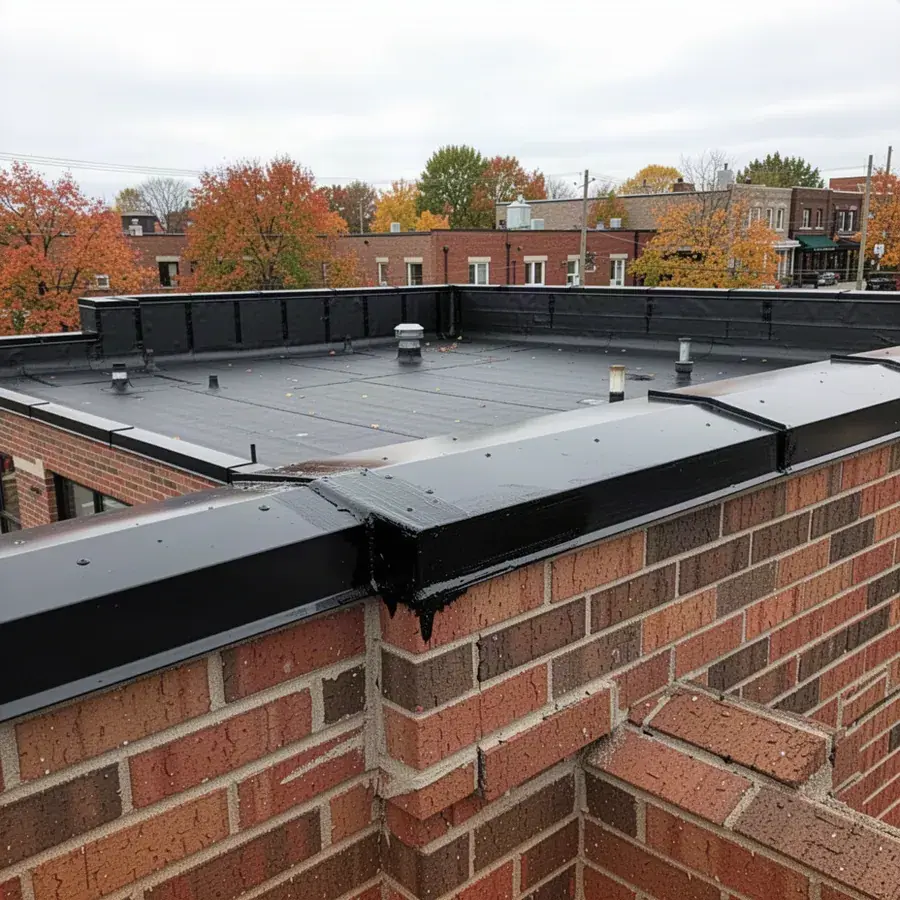
| Parapet caps and coping | Open joints between coping sections | Butyl tape at laps and polyurethane at exposed joints |
| Membrane seams | Lap edges lift as old adhesive fails | Primer and seam tape, heat welding on TPO, or a reinforced strip |
| Metal roof laps and screws | Washers crack and laps open | Oversized screws and butyl or MS polymer at laps |
Satellite dishes no longer in use are best removed rather than resealed, and new ones can usually mount on a wall or fascia instead of the roof. Taking the penetration away is always more reliable than sealing it.
Ice dam leaks along the eaves are a different problem. Water backing up under shingles cannot be stopped by sealant on the surface, so it calls for eave membrane, ventilation and insulation work instead of more caulk.
Sealants We Use and Why
No sealant suits every roof joint. Choosing by chemistry, not by what is already in the truck, is what makes a seal last more than one season.
- Polyurethane, such as Sikaflex-1a: tough, paintable and strongly bonded to masonry and metal, so it suits coping joints and chimney work, though sun slowly hardens it over the years.
- Silicone, such as DOWSIL 795: excellent UV resistance and flexibility at glass and metal, but almost nothing bonds to it afterwards and it grips poorly on asphalt.
- Butyl: stays tacky and flexible inside concealed laps, such as under metal coping or panel overlaps, but should not be left exposed to sun.
- MS polymer (hybrid): bonds to slightly damp surfaces, resists UV and can be painted, a good all-round choice for metal details.
Roofing tar, also called plastic cement, is a short-term patch. It dries and cracks within a season or two, hides where the water is really entering, and leaves a mess that must be scraped off before a proper repair can bond.
Liquid-Applied Waterproofing Membranes
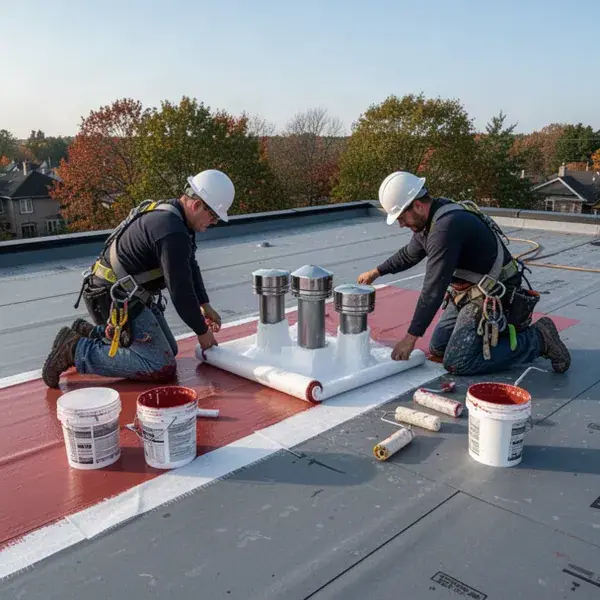
Liquid-applied membranes are brushed or rolled on in layers and cure into one seamless sheet. They suit walk-out decks, balconies over rooms, and awkward details such as clusters of pipes or a wall meeting three roof planes.
PMMA systems such as Soprema Alsan RS and Siplast Parapro cure in hours, even in cool weather, which makes them ideal for complex flashings. Polyurethane systems such as Sikalastic deck coatings build up in base, intermediate and top coats for larger walkable areas.
Every system relies on reinforcing fleece or fabric at corners, drains, door sills and wall transitions. The finished surface then gets a wear layer, either a textured topcoat with broadcast aggregate for traction or pavers set on pedestals over a protection layer.
Sealing Is a Repair, Not a Roof
Sealant buys time on a roof that is otherwise sound. It cannot rescue one that is failing everywhere, such as shingles losing their granules or a membrane with split seams across every run.
If we find ourselves chasing a new leak every few months, we will say the roof needs replacing rather than keep billing for patches. On a worn low-slope roof, that usually means a new membrane through our flat roof systems work, and on pitched roofs, a frank repair-or-replace conversation in writing.
Burlington's freeze-thaw swings are hard on sealant joints, because water that seeps into a hairline crack freezes and widens it overnight. A joint that looks tight in October can be open by March, so we schedule detail sealing in spring and fall and suggest a quick recheck the following season.
How a Waterproofing Job Is Done
Most detail sealing takes a few hours, while a deck membrane usually needs two to three days to allow each coat to cure.
Diagnose the Source
We trace stains back to the entry point with a moisture meter and controlled water testing. If water is coming in right now, start with our roof leak repair service.
Prep and Prime
Old sealant, tar and loose material are removed, surfaces are cleaned and dried, and the maker's primer is applied.
Reinforce
Fleece, fabric or backer rod goes into corners, joints and transitions so the seal can flex without tearing.
Apply
Sealant or membrane is applied to the specified thickness, with tie-ins lapped under flashings and door sill pans.
Flood or Hose Test
Decks and drains get a flood test, and other details get a targeted hose test, before we sign off and send photos.
Sealing and Waterproofing FAQs
How often should roof sealant be replaced?
Check exposed sealant joints every year, ideally each spring after the freeze-thaw season. Replace a joint at the first sign of cracking, hardening or pulling away from either side. Well-chosen sealants often last 5 to 10 years or more, but sun-facing joints wear fastest.
Is roofing tar a good fix?
Only as an emergency stopgap until a proper repair can be made. Tar cracks quickly, hides the real entry point and has to be scraped away before modern sealants or membranes will bond. Many leaks we are called to are tar patches that failed and let water spread further.
Can you waterproof a deck that sits over a room?
Yes, with a walkable liquid-applied or sheet membrane system designed for occupied space below. The critical points are sloping the surface away from the house, tying the membrane under the door sill and up the walls, and giving water a clear path to a drain or scupper. If the framing needs changes to create that slope, a building permit may be required.
Book a Waterproofing Assessment
We inspect the problem details, find where water is getting in, and recommend the specific sealant or membrane for each one. You receive a written scope with photos, so you can see exactly what will be fixed and how.
We answer the phone 24/7, or you can send photos and your address below to arrange a visit.
Phones answered 24/7, including emergencies.
- 1We call you back to confirm the details.
- 2We inspect the roof and attic and take photos.
- 3You get a written scope and price. No pressure.