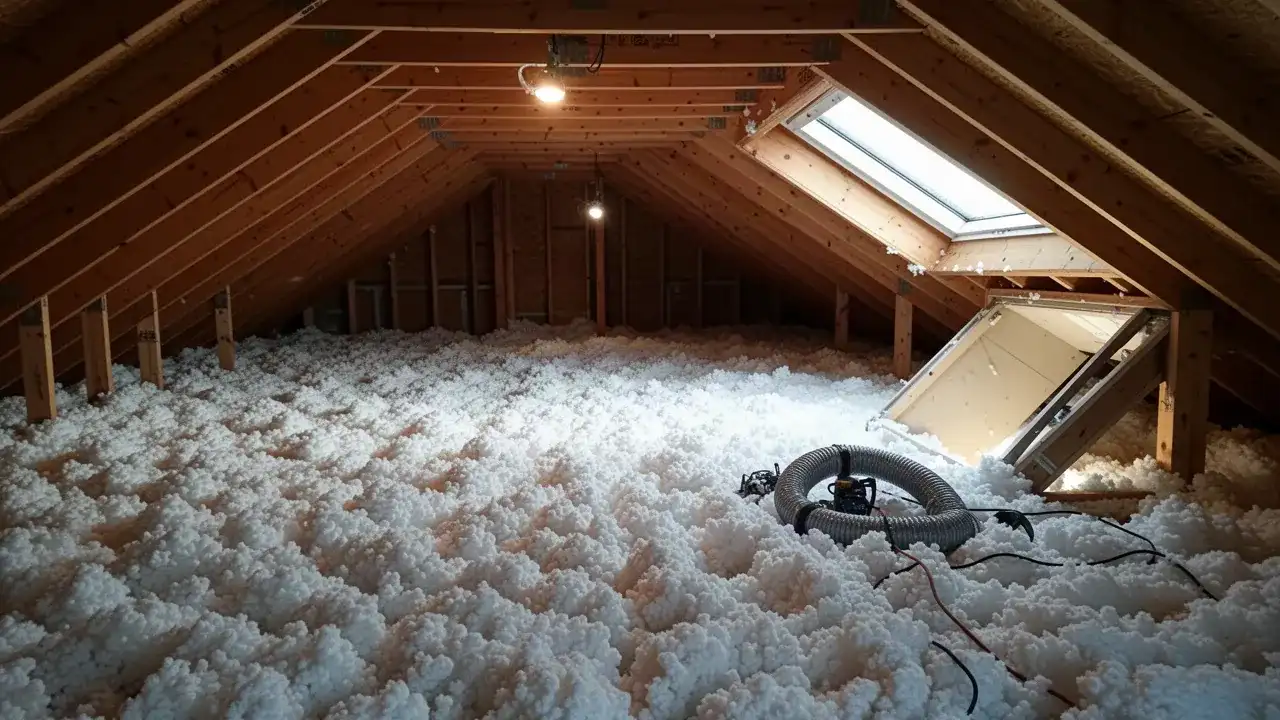
Attic Insulation in Burlington, ON
Attic insulation in Burlington is work we handle as roofers, because what happens on the attic floor decides whether snow melts on your roof, how hard your ventilation has to work and how long the roof deck stays dry. Here in Burlington, Fixall Roofing air seals, tops up and replaces attic insulation as part of keeping the whole roof system healthy.
Our approach is to seal first, insulate second and then confirm the soffits can still breathe. That order matters more than the brand of insulation, and skipping a step is why some upgrades leave homeowners with the same cold rooms and ice as before.
Owners of older homes in Burlington and the surrounding towns, where decades of settling have left the insulation thin, see the biggest gains. So does anyone living with cold upstairs rooms, high heating bills or ice that returns along the eaves every winter.
- 15+ years experience
- 700+ jobs completed
- Fully insured + WSIB
- Working at Heights certified
- 1-year labour warranty
- Open 24/7
Attic Insulation Upgrades for Burlington Homes
Every upgrade starts with an assessment in the attic. We measure insulation depth in several places, note its type and condition, look for air leaks, wet spots and pest activity, and check that the soffit vents are open.
A typical top-up on a detached home takes a single day once the air sealing is finished. Price depends on attic area, the starting and target R-value, how much sealing is needed, how easy the attic is to reach and whether old material has to come out first.
- Air sealing of ceiling penetrations, wall top plates and the attic hatch
- Blown-in fibreglass or cellulose top-ups to a measured depth
- Rafter baffles that protect soffit intake
- Insulated, weatherstripped attic hatch covers
- Removal of wet, compressed or contaminated insulation
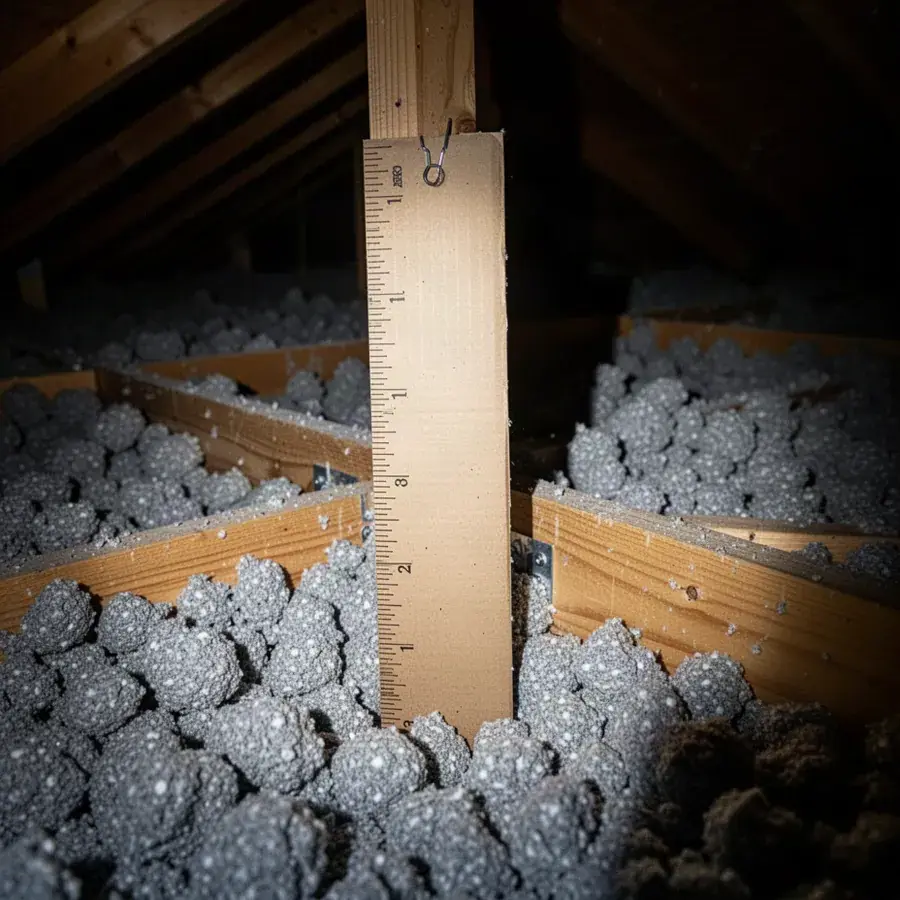
- Depth rulers fixed in the attic so the installed level can be checked
Blown-In vs Batt Insulation
Most attic upgrades use loose-fill insulation blown over the existing layer. The comparison below shows where each common option fits.
| Type | R-value per inch | Coverage and cost | Best use |
|---|---|---|---|
| Blown fibreglass | About R-2.5 to R-3 | Fills around wires and bracing; low cost | Top-ups in most attics |
| Blown cellulose | About R-3.5 | Dense, slows air movement; low cost | Top-ups where density helps; must stay dry |
| Batts (fibreglass or mineral wool) | About R-3 to R-4 | Gaps at framing and wiring; moderate cost | Open, regular joist bays and knee walls |
| Spray foam (closed cell) | About R-6 to R-7 | Seals air as it insulates; highest cost | Cathedral ceilings and hard-to-seal areas |
For most Burlington attics with a mix of old batts and settled loose fill, blown-in material is the better choice, because it fills around wiring, bracing and irregular framing that batts leave gapped. Dense cellulose also absorbs some sound, which is why it can be part of roof soundproofing for homes under metal roofs or near busy roads like the QEW.
How Much Insulation a Burlington Attic Needs
R-value measures resistance to heat flow, so a higher number means heat escapes more slowly. Depth is what produces it: an attic's R-value is roughly the inches of insulation multiplied by the R-value per inch of the material.
For new homes, the Ontario Building Code's energy efficiency standard, Supplementary Standard SB-12, uses R-60 (RSI 10.56) for ceilings below an attic in its prescriptive compliance packages. That works out to roughly 20 to 24 inches of blown fibreglass or about 17 inches of cellulose.
Many existing homes, especially those built before the 1990s, have far less once decades of settling are taken into account. The Home Renovation Savings Program uses R-50 as its attic target, a sensible minimum for an existing house, while R-60 brings an older attic up to the new-home standard.
Depth has to be even across the whole attic. The thin strip near the eaves, where the roof slope pinches the space, is where heat escapes first, so we fill it right out to the outside wall without blocking the vents.
Air Sealing Comes First
Insulation slows heat moving through the ceiling, but it does very little to stop moving air. Warm, humid air flows straight through fibreglass and loose fill wherever there is a gap in the ceiling below.
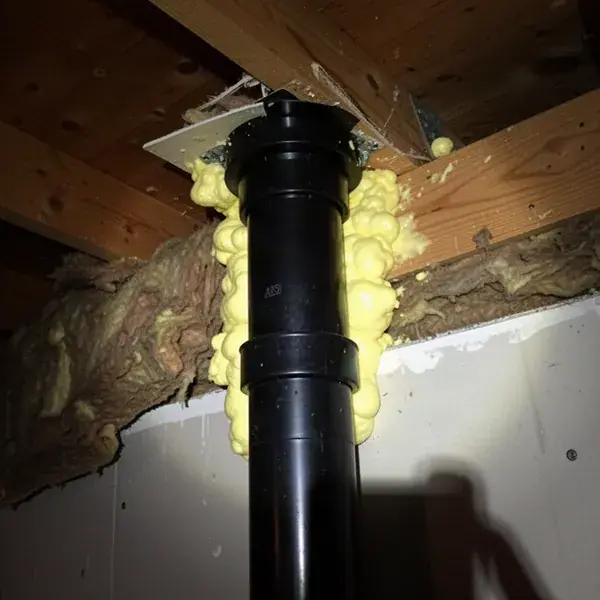
The biggest leaks are usually pot lights, the top plates of interior walls, plumbing stacks and wiring holes, chimney and flue chases, and the attic hatch. We seal them with spray foam and caulk, and around chimneys and flues we use sheet metal and high-temperature sealant to keep the required fire clearance.
Older recessed lights that are not rated for insulation contact, known as non-IC fixtures, need a fire-rated cover built around them or replacement with a sealed IC-rated fixture by an electrician. Insulation should never be packed directly over them.
Sealing also protects the roof itself. Less warm air reaching the attic means less frost forming on the deck in winter and less moisture for the vents to remove.
Keeping Soffit Vents Open with Baffles
Blown-in insulation flows wherever the hose points, including into the eaves where the soffit vents feed air into the attic. Once that intake is buried, the attic stops ventilating properly no matter how many exhaust vents sit on the roof.
Before any top-up, we fasten rafter baffles between the rafters at the eaves. They hold a clear air channel open above the insulation while letting us fill right out to the exterior wall.
Baffles are where insulation and roof ventilation meet, so we check both sides on every job. A top-up that smothers the soffits can create the very moisture problems it was meant to solve.
Removing Old or Damaged Insulation
Insulation that has been soaked by a roof leak, crushed by storage or fouled by raccoons, squirrels or mice should come out rather than be buried. Wet material loses much of its R-value and holds moisture against the ceiling, and droppings and nesting carry health risks.
We remove damaged insulation with a high-powered insulation vacuum, bag it for disposal and clean the affected areas before air sealing and reinsulating. Wet insulation usually points to a leak, so a roof inspection to find the source comes before any new material goes in.
Vermiculite needs special care. This pebbly, grey-brown or gold insulation, found in some older Canadian homes, may contain asbestos, and Health Canada advises homeowners not to disturb it.
If we find vermiculite, we stop and recommend testing by an accredited lab. Removal, if needed, is done by an asbestos abatement contractor, and we return to air seal and insulate once the attic is clear.
Rebates for Attic Insulation in Ontario
The Home Renovation Savings Program, delivered by Enbridge Gas and Save on Energy, offers a standalone attic insulation rebate of up to $1,250 without a pre-upgrade energy assessment. The amount depends on your starting R-value, the attic must be brought up to R-50, and the rebate is capped at a portion of eligible costs.
This standalone path is processed through participating insulation contractors, and the program is currently scheduled to end on November 30, 2026, with terms that can change or close early. Check the current rules and participating contractor list on the program website before booking work.
If the rebate matters to your budget, raise it at the assessment and we will tell you plainly whether our work can be submitted under the program or not.
Attic Insulation FAQs
How long does attic insulation last?
Fibreglass and cellulose can perform for many decades if they stay dry and undisturbed. Loose fill settles a little over time, cellulose more than fibreglass, so we blow slightly above the target depth to allow for it. Roof leaks, pests and foot traffic through the attic are what shorten its life.
Can new insulation go over old insulation?
Usually yes, as long as the old layer is dry, clean and free of mould and pests. Air sealing is done first, often by pulling back the old insulation at leak points, and then new loose fill goes over the top with no vapour barrier between the layers.
Will more insulation stop ice dams?
It helps a lot, but only as one of three parts. Air sealing stops the warm air that does most of the melting, insulation slows the heat conducted through the ceiling, and ventilation removes what still gets through. Our page on ice dams covers safe removal and the other prevention steps.
Book an Attic Insulation Assessment
We will measure your current insulation, find the main air leaks, check the soffits and give you a written quote for sealing and a top-up to the R-value you choose. You will see photos of everything we found, including any moisture or pest issues.
Air sealing and insulation labour is covered by our 1-year labour warranty.
Phones answered 24/7, including emergencies.
- 1We call you back to confirm the details.
- 2We inspect the roof and attic and take photos.
- 3You get a written scope and price. No pressure.