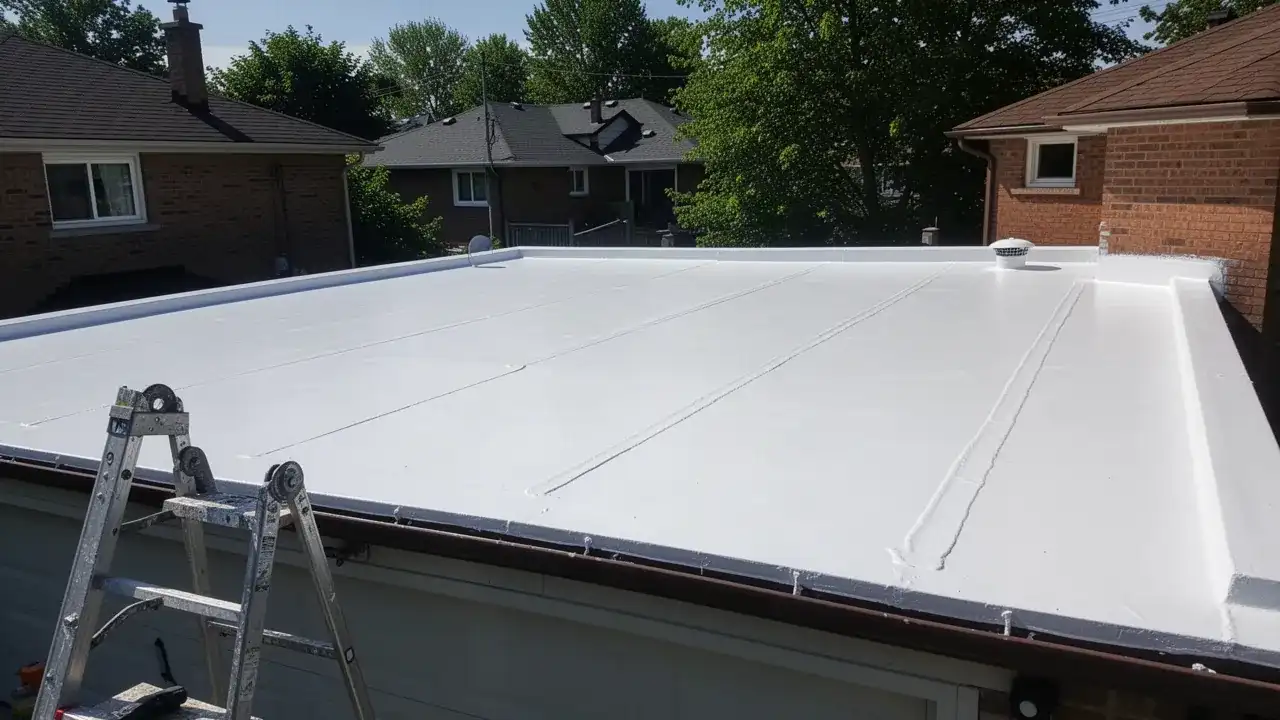
White silicone coating on Burlington flat garage roof
Residential roofing

Roof Coating in Burlington, ON for Flat and Metal Roofs

Roof coating in Burlington pays off on a narrow group of roofs: flat and low-slope membranes that are still dry and sound, and metal roofs whose paint is failing before the steel is. Fixall Roofing, a Burlington roofing contractor, applies silicone, acrylic and rubberized coatings on homes, garages and small buildings, and we tell owners plainly when a coating would be money wasted.

A coating is a fluid-applied layer that renews the weathering surface across the whole roof. It cannot dry out a wet deck, rescue a roof at the end of its life, or replace a proper repair at a leaking pipe or wall.

This page is for homeowners and small-building owners. Plazas, warehouses and other large buildings are handled through our commercial roof restoration service.

  • 15+ years experience
  • 700+ jobs completed
  • Fully insured + WSIB
  • Working at Heights certified
  • 1-year labour warranty
  • Open 24/7

Roof Coating for Burlington Homes and Small Buildings

We coat three main kinds of roof. Flat and low-slope membranes over garages, additions and porches; steel roofs and outbuildings with surface rust or chalking paint; and small commercial roofs such as detached shops and two-unit storefronts.

If the membrane underneath is past saving, a coating only delays the bill, and our flat roofing crew will replace it instead. Every coating job we do includes the steps below.

  • Moisture check of the membrane and insulation before any quote
  • Cleaning suited to the surface, plus rust treatment on metal
  • Repairs to blisters, splits and loose fasteners
  • Primer where the substrate or the coating maker requires one
  • Fabric reinforcement at seams, fasteners, drains and penetrations
  • Coating applied to the specified thickness, with product and readings recorded in writing
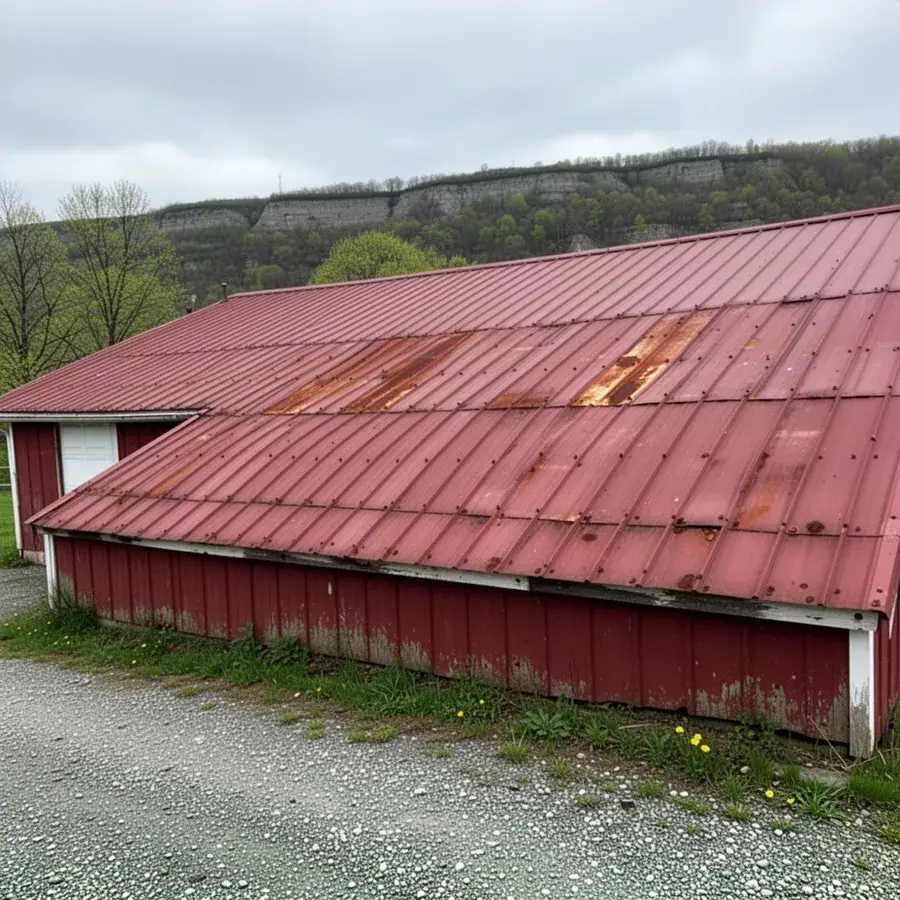
Metal garage roof ready for coating in Burlington

Coating Types Compared

Each coating chemistry suits different roofs and different weather. Picking the wrong one is the most common reason coatings peel or wash off within a few years.

CoatingPonding and sunCure and recoatBest substrate
SiliconeHandles ponding water, excellent UV resistanceCures in cool weather if dry, recoat only with silicone, about 10 to 15 yearsEPDM, SBS, spray foam, metal
AcrylicBreaks down under standing water, very reflectiveNeeds warm, dry hours to cure, recoat about 5 to 10 yearsWell-drained metal and SBS
SEBS rubberizedTolerates short ponding, very stretchySolvent-based, recoat about 8 to 12 yearsModified bitumen, metal, older asphalt roofs
Aluminum asphaltFair, reflects sun off dark asphaltQuick to apply, recoat about 3 to 5 yearsBuilt-up and smooth SBS roofs

Silicone systems such as GacoRoof from Holcim and Henry Tropi-Cool suit most Burlington garage roofs, because few small flat roofs drain perfectly. Acrylic is less expensive and works well on sloped metal, where water never sits.

When a Roof Coating Makes Sense, and When It Does Not

A coating is worth it when the membrane is dry, the seams are intact or easily repaired, and the roof still has some years left. Coated at that point, a roof can often gain another decade before replacement.

  • Not on asphalt shingle roofs. Shingles are built to shed water and dry out, and a film coating can trap moisture and void the shingle warranty.
  • Not over wet insulation. Water sealed under a coating keeps rotting the deck and soaking the insulation, so wet areas must be cut out and replaced first.
  • Not over failing seams. Coating bridges small gaps, but open laps and lifted flashings need proper repair before any coating goes on.
  • Not on a roof at the end of its life. Widespread blistering, brittle membrane or a sagging deck all point to replacement.
  • Not acrylic on a ponding roof. Standing water softens acrylic and breaks its bond within a season or two.

We also check what a coating means for the future. Some coatings must be removed before a new membrane can be installed, which adds cost at replacement time.

Our Roof Coating Process

Coatings fail at the bond line and at thin spots. Our process is built around preventing both.

Cleaning and Adhesion Testing

We wash the roof at a pressure suited to the surface, remove loose granules, rust scale and old coating, and let it dry fully. Fragile or brittle membranes get a gentler hand clean.

Before committing the whole roof, we apply a test patch with a strip of fabric embedded in it. After it cures we pull the strip, and the way it releases tells us whether the coating bonds directly or needs a primer.

Seam and Fastener Reinforcement

Polyester reinforcing fabric is embedded in a base coat over membrane seams, metal panel laps, fastener rows, drains and pipe penetrations. These are the spots that move and crack first.

On metal roofs we replace stripped or loose screws with oversized fasteners before reinforcing. A coating over a loose screw cracks the first time the panel expands.

Applying to the Specified Thickness

Each product has a required thickness, measured in mils, and warranty length depends on reaching it. Silicone systems often call for 20 to 30 dry mils in total.

The crew checks wet film readings with a gauge as they go and confirms coverage against the amount of product used per area. Thin coats look fine on day one but wear through in a few seasons.

Shingle Rejuvenation Sprays: What to Know

Some companies sell sprays, often soy or plant-oil based, that are applied to aging asphalt shingles. The claimed benefit is restored flexibility and slower granule loss, which sellers say can add years to a roof.

What a spray cannot do is reattach lost granules, flatten curled shingles or repair cracks, flashings or decking. Independent long-term data on these products is still limited, so results are hard to predict.

Before treating, ask your shingle manufacturer whether an aftermarket treatment affects your material warranty, and get the answer in writing. For most shingle roofs, routine roof maintenance such as clearing debris, resealing flashings and securing lifted tabs does more per dollar.

Roof Coating Cost

Around Burlington, Hamilton and Halton, most coating jobs on residential and small-building roofs fall in roughly the $3 to $8 per square foot range. Very small roofs carry a minimum charge because setup and cleaning take nearly as long as on a larger one.

The figures below drive where a roof lands, and a written quote follows an on-site assessment and moisture check.

  • Repairs needed before coating, including cut-outs of wet areas
  • Cleaning, rust treatment and primer
  • Coating type and specified thickness
  • Number of seams, fasteners and penetrations to reinforce
  • Access, roof height and safety setup

Roof Coating FAQs

How long does a roof coating last?

Acrylic coatings typically last about 5 to 10 years, silicone about 10 to 15 years or more at the right thickness, and aluminum coatings about 3 to 5 years. Thicker applications last longer, and a recoat on a clean, sound surface restarts the clock. Ponding water and foot traffic shorten every figure.

Can a roof be coated in the fall?

Yes, but the window narrows in Burlington's shoulder seasons. Acrylic needs air and surface temperatures of about 10°C and rising, the surface at least 3°C above the dew point, and several dry hours before evening dew forms. Silicone tolerates cooler days, yet the roof must still be completely dry, so we watch morning dew and short October afternoons closely.

Does a white roof coating lower cooling costs?

A white coating reflects much of the sun's heat, so the roof surface stays far cooler on summer afternoons. The savings depend on what sits below: rooms with little ceiling insulation and air conditioning benefit most. Over a well-insulated attic the effect on cooling bills is smaller.

Request a quote

Find Out If Your Roof Qualifies for Coating

We start with an inspection and moisture check, then tell you whether your roof is a good candidate for coating, needs roof sealing at a few problem details, or is ready for replacement. You get the answer and the price in writing.

Call any time, or send photos and your address below to book an assessment.

Phones answered 24/7, including emergencies.

  1. 1We call you back to confirm the details.
  2. 2We inspect the roof and attic and take photos.
  3. 3You get a written scope and price. No pressure.
Call 289-816-1772Get a Quote