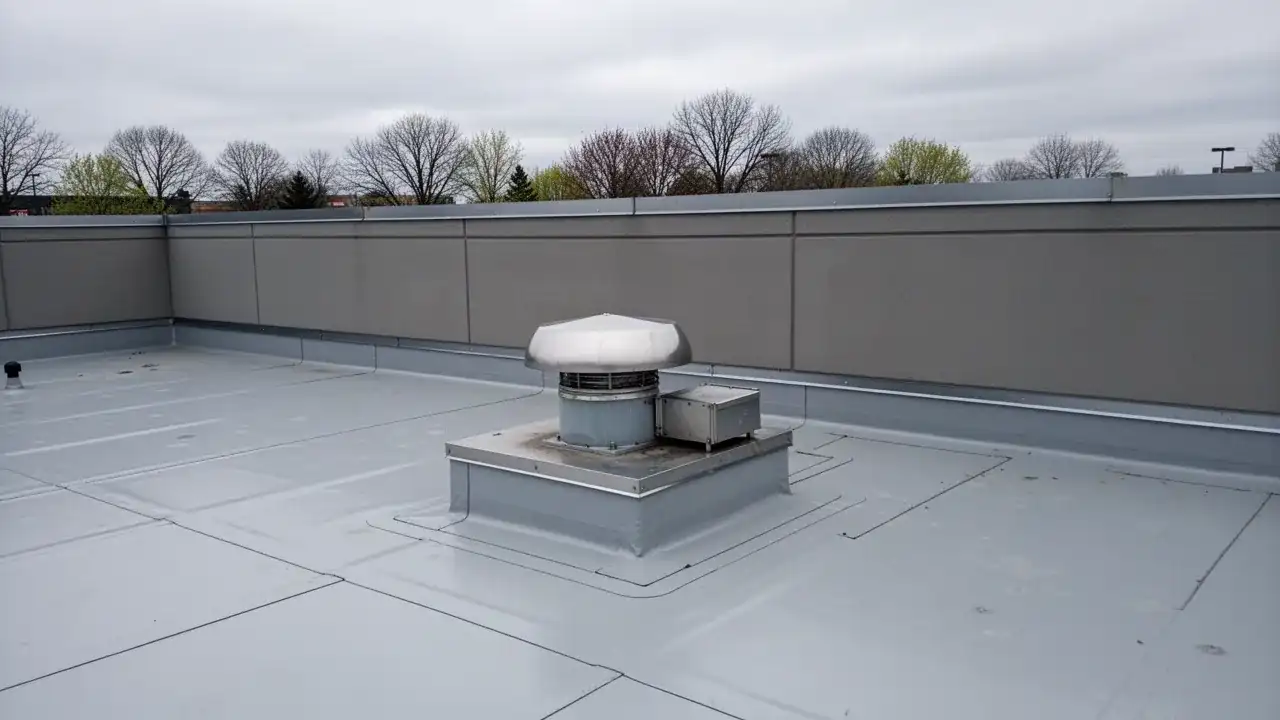
PVC Roofing in Burlington, ON for Commercial Properties
PVC roofing in Burlington earns its place on buildings where grease, oils or chemicals land on the roof: restaurants, plazas with food tenants, commercial kitchens and food processing plants. As a Burlington commercial roofing contractor, Fixall Roofing installs, replaces and repairs PVC membrane roofs on these properties throughout Burlington and the nearby Halton and Hamilton communities.
PVC is a flexible vinyl membrane with hot-air welded seams, much like TPO, but its chemistry holds up where other single-ply roofs soften, swell or crack. For a building with kitchen exhaust fans on the roof, that difference decides whether the roof lasts 25 years or starts leaking around the fans in five.
If you own or manage one of these buildings, this page explains where PVC is worth its higher price, how we weld and flash it, and the repair mistakes that cut its life short.
- 15+ years experience
- 700+ jobs completed
- Fully insured + WSIB
- Working at Heights certified
- 1-year labour warranty
- Open 24/7
Commercial PVC Roofing for Burlington Properties
We handle full PVC roof installations on new buildings, tear-off replacements, repairs to existing PVC roofs and custom flashings around kitchen exhausts and process equipment. On mixed plazas, the restaurant units can be roofed in PVC and tied into a TPO or modified bitumen roof elsewhere with a proper transition detail.
We work with PVC membranes from manufacturers such as Sika Sarnafil, Carlisle, IB Roof Systems and Duro-Last, and choose based on the exposure, the warranty required and the flashing accessories available. Common thicknesses are 50, 60 and 80 mil, with thicker sheets for heavy kitchen service traffic.
Because a PVC job is usually driven by one problem area, our quote is broken down so you can see what the grease zone costs separately from the rest of the roof.
Why PVC Suits Restaurants and Food Facilities
Kitchen exhaust fans discharge a fine mist of grease that settles around the fan and drains across the roof. Animal fats and cooking oils attack asphalt roofs, soften TPO over time and swell an EPDM membrane, which is why leaks on restaurant roofs cluster around the exhaust fans.
PVC resists most fats, oils and greases, and many acids and alkalis found in food processing and light manufacturing exhausts. Resistance varies by product, so for anything beyond cooking grease we check the specific chemical against the manufacturer's resistance chart before specifying.
Even on PVC, grease should not be left to pool. We pair the roof with a grease containment unit at each exhaust fan and slope or walkway details that keep the residue in one cleanable area.
- Restaurants and food courts in retail plazas
- Commercial kitchens in institutions and seniors' residences
- Food processing and bakery facilities
- Buildings with oil-mist or chemical exhausts from light manufacturing
Work around a kitchen needs its own planning. Exhaust fans near the work area are shut down and cooled with the restaurant's agreement, we schedule the grease zone outside service hours, and we coordinate with the hood cleaning contractor so built-up grease is removed before new membrane goes down.
PVC vs TPO
PVC and TPO roofing look alike once installed and are both welded with hot air. The differences show up in chemistry, ageing and price.
| Factor | PVC | TPO |
|---|---|---|
| Grease and chemical resistance | Strong against most oils, fats and many chemicals | Moderate; degrades with grease exposure |
| Flexibility | Very flexible, easy to shape around details | Stiffer, especially in cold weather |
| Weldability with age | Generally stays weldable for many years | Harder to weld once heavily weathered |
| Cost | Higher | Lower |
| Best use | Restaurants, food plants, chemical exhausts | Most offices, plazas and warehouses |
PVC's flexibility comes from plasticizers blended into the sheet, and that is also its main weakness. Higher-quality formulations use plasticizers that resist migrating out, which matters a lot for how the roof ages.
PVC also contains chlorine, which makes the sheet naturally resistant to spreading flame. On roofs around hot kitchen exhausts, that is a useful margin on top of the grease resistance.
Prefabricated Flashings and Custom Details
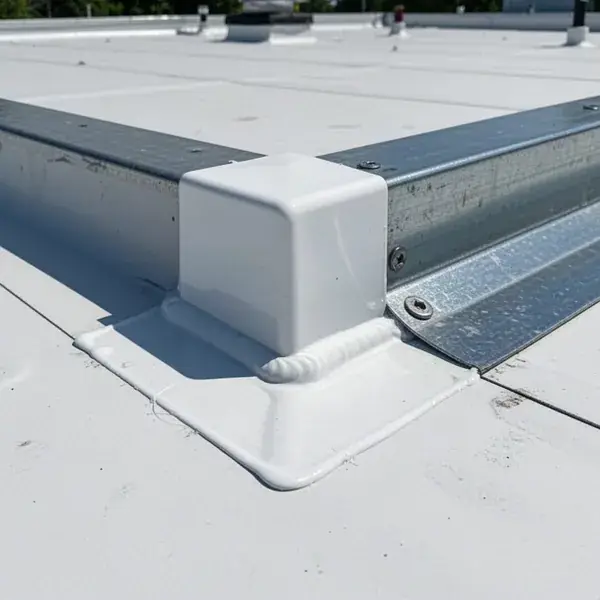
Most PVC leaks start at details, not in the field of the roof. We use factory pre-formed inside and outside corners, pipe boots and stack flashings wherever they fit, because they remove the hand-cut folds where field-made details tend to fail.
For complex rooftops with clusters of exhausts, odd-shaped curbs or tight spaces between units, we shop-weld custom flashings from PVC sheet and PVC-coated metal. PVC-coated metal is bent into edge, gravel stop and parapet profiles so the membrane welds directly to the metal, with no sealant joint to maintain.
Some PVC systems can be prefabricated in large panels that are measured from the roof and welded in a factory. That reduces welding on site, which helps on tight schedules over an operating restaurant.
PVC Installation and Welding
Deck and Insulation
The deck is repaired and a vapour retarder installed on heated buildings. Polyiso insulation, tapered toward drains, goes down with a cover board on top.
Separation Sheets
Wherever PVC would touch asphalt, coal tar or polystyrene insulation, a fibreglass or polyester separation sheet goes in between. Skipping it lets the incompatible material pull plasticizer out of the PVC.
Membrane Attachment
PVC is mechanically attached or fully adhered depending on the deck and the uplift design tested to CSA A123.21. Sheets are laid with laps shingled away from drains.
Hot-Air Welding
Field seams are welded with an automatic welder and details by hand. Daily test welds are peeled to confirm the settings before production welding starts.
Seam Probing
Every seam is probed after it cools to find voids, which are rewelded immediately. Seam sample cuts are taken and patched where the warranty requires them.
Flashings and Grease Containment
Curbs, walls, drains and exhausts are flashed with PVC accessories and coated metal. Grease containment is set at each kitchen fan before the final walk and photo closeout.
PVC Repair and Compatibility Issues
PVC is not compatible with asphalt products without a separation layer. A roofer who patches a PVC roof with asphalt roof cement or torches SBS directly against it causes the membrane to stiffen and crack in that spot within a few years.
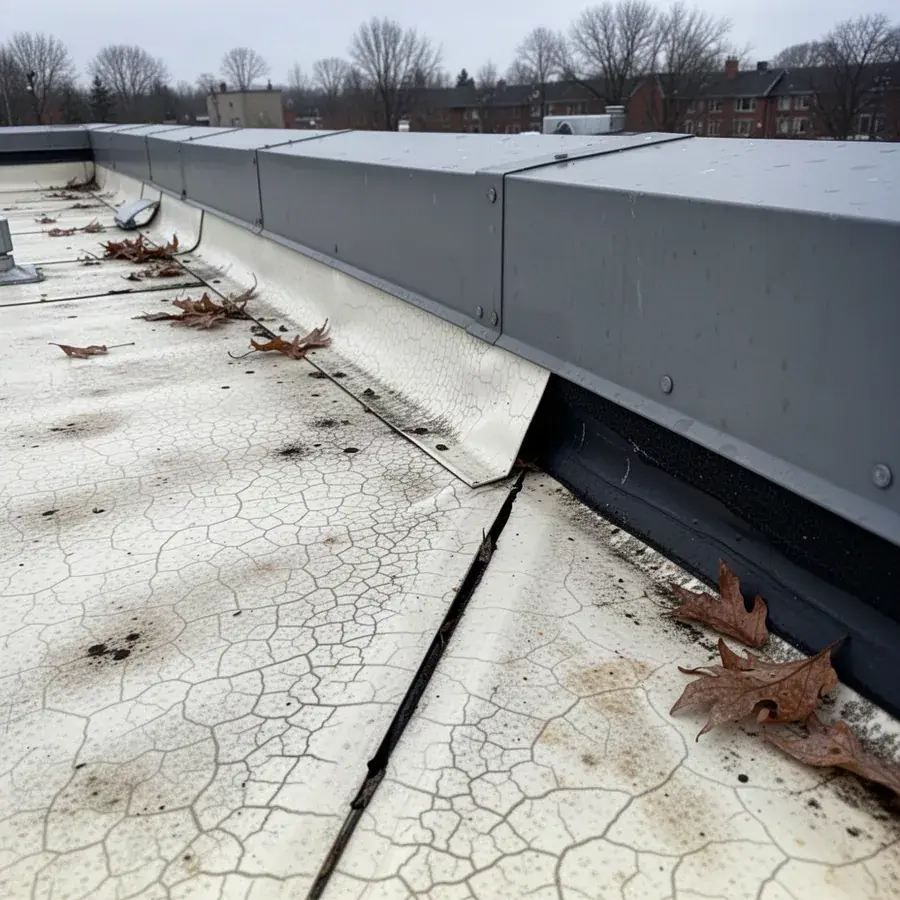
Repairs on sound PVC are straightforward: clean the area, weld a new patch, probe the edges. Older PVC that has lost much of its plasticizer turns brittle and can shatter underfoot in winter, and at that point welding new material to it often fails.
Sound PVC can be welded in winter with adjusted heat and speed settings. Older, stiffer sheets are better repaired in milder weather, when the membrane can be folded and rolled without cracking next to the patch.
Routine roof inspections catch early signs of plasticizer loss, such as surface crazing and shrinkage at the perimeter. When a PVC roof reaches that stage, planning a commercial roof replacement is usually smarter than chasing cracks.
PVC Roofing FAQs
How long does a PVC roof last?
A quality PVC roof typically lasts 20 to 30 years. Thickness, the plasticizer formulation, grease management and regular maintenance make the biggest difference within that range. Roofs with heavy grease loads last longest when the containment units are emptied on schedule.
Can PVC go over an asphalt-based roof?
Only with a proper separation layer, such as a cover board or a separation sheet approved by the manufacturer. Direct contact with asphalt draws plasticizers out of the PVC and shortens its life.
Is PVC worth the extra cost over TPO?
Yes, where grease, oils or chemicals reach the roof, because TPO and EPDM break down under that exposure. On an office or warehouse with no such exposure, TPO usually delivers similar performance for less.
Get a PVC Roofing Quote
Tell us the building address, what is venting onto the roof and where leaks or damage are showing. We will inspect, confirm what the roof is exposed to and send a written quote for PVC where it is the right membrane.
Phones answered 24/7, including emergencies.
- 1We call you back to confirm the details.
- 2We inspect the roof and attic and take photos.
- 3You get a written scope and price. No pressure.