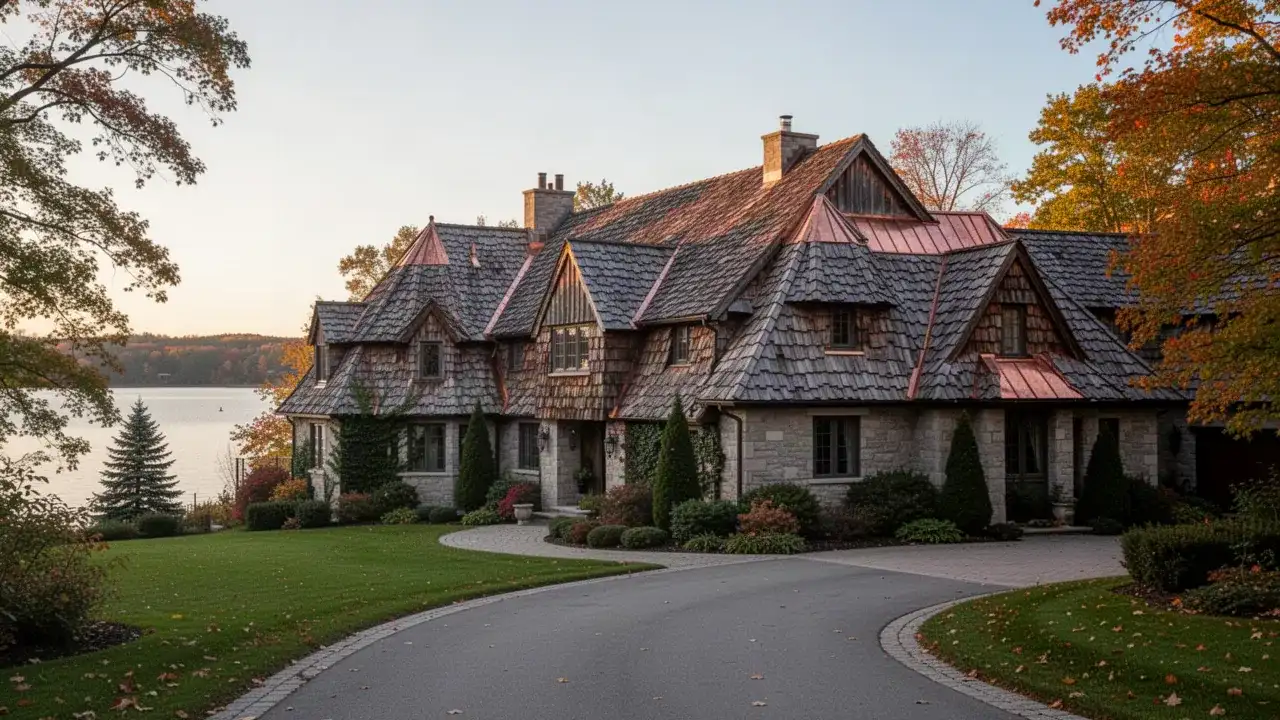
Weathered cedar shake roof on Burlington estate home
Residential roofing

Cedar Shake Roof Installation in Burlington, ON

A cedar shake roof in Burlington usually crowns a custom home, a lakeside estate property or a heritage-style house where the wood is part of the character. Fixall Roofing is a Burlington roofing contractor that installs, replaces and repairs cedar shake and cedar shingle roofs for owners who want real wood overhead.

Wood behaves nothing like asphalt once it is on a roof. It swells, shrinks and weathers with every season, so the way it is laid and the way it is looked after decide whether it lasts for decades or starts cupping and splitting early.

Owners who contact us usually face one of three choices: repair a roof that is basically sound, replace it in cedar, or switch to a lookalike product. We give you a plain answer on which one your roof and budget point to.

  • 15+ years experience
  • 700+ jobs completed
  • Fully insured + WSIB
  • Working at Heights certified
  • 1-year labour warranty
  • Open 24/7

Cedar Shake Installation, Replacement and Repair

New cedar installs go on custom builds and additions where the design calls for wood. Full replacements start with a tear-off to the deck, and on older homes that often means dealing with the original spaced board sheathing underneath.

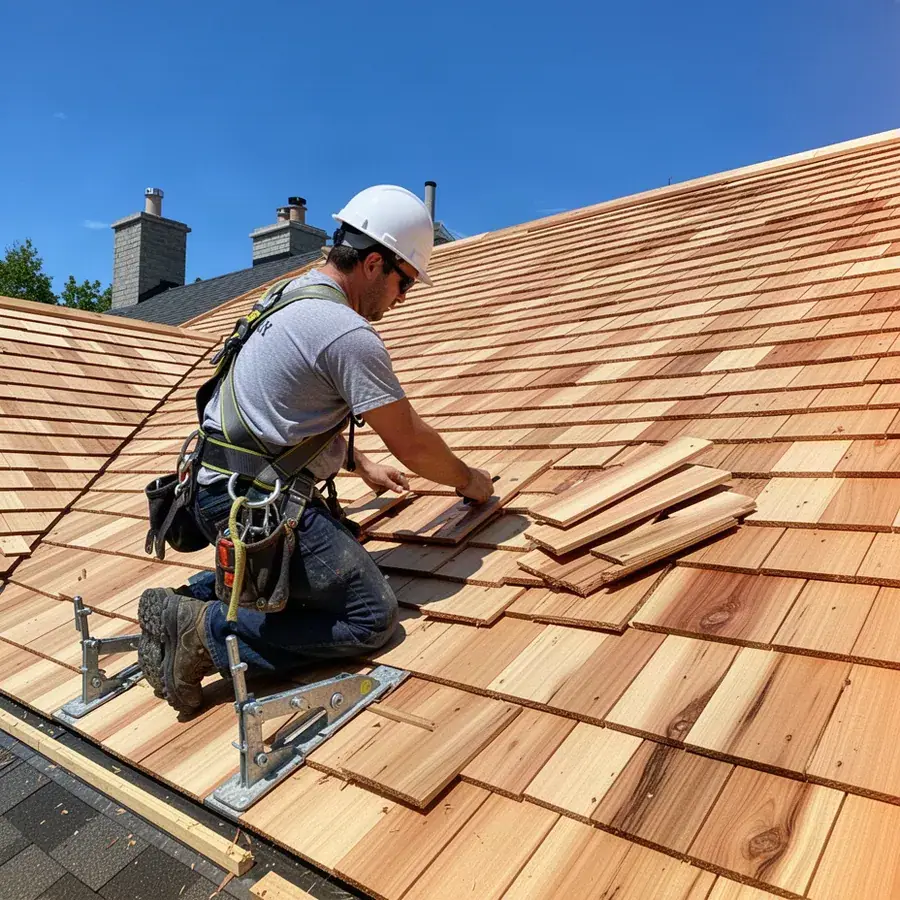
Repairs are common on roofs that are basically sound: split or missing shakes, slipped pieces, failed valley and chimney flashing, and ridge caps loosened by wind. We replace individual pieces by cutting the old nails and slipping new cedar into place, so the surrounding roof is not disturbed.

We also apply preservative treatments to clean, dry cedar to slow weathering and moss growth. Treatment is only worth doing on a roof with real life left in it.

Roofer fitting new cedar shakes on Burlington roof

Shakes vs Shingles: Know What Is on Your Roof

Homeowners use the word shake for any wood roof, but shakes and cedar shingles are different products with different installation rules. Knowing which you have changes how it is repaired and what it should cost.

FeatureCedar shakesCedar shingles
How madeSplit face, either hand-split and resawn or tapersawnSawn smooth on both faces
LookRugged, uneven, deep shadow linesTailored, even courses
Thickness at the buttThicker, roughly 1/2 to 3/4 inchThinner, roughly 3/8 to 1/2 inch
Under the coursesFelt interlay between every courseNo interlay, often a ventilation mat beneath
Common lengths18 and 24 inch16, 18 and 24 inch

Nearly all roofing cedar is Western red cedar from British Columbia, valued for natural oils that resist decay and for its stability. Those oils leach out over the years, which is why older roofs grey, soften and grow moss.

Grade matters as much as type. Look for Cedar Shake and Shingle Bureau labels, such as Number 1 Blue Label shingles, which are clear heartwood with edge grain, and Premium or Number 1 grade shakes; lower grades belong on sheds and sidewalls rather than a main roof.

How We Install Cedar for Ontario Winters

Freeze-thaw cycles, wet snow and humid summers are hard on wood. These three details decide how long a cedar roof lasts here.

Interlayment and Breathable Underlayment

Shakes have gaps between their rough faces, so each course gets an 18 inch strip of heavy roofing felt laid over its upper portion, set above the butt at twice the exposure. This interlay blocks wind-driven snow while still letting the wood breathe.

Cedar shingles sit tighter and need no interlay, but they should not lie flat against solid underlayment. We install a three-dimensional ventilation mat such as Benjamin Obdyke Cedar Breather beneath them, and ice and water membrane still goes along the eaves as the Ontario Building Code requires.
Spacing, Exposure and Stainless Fasteners

Cedar swells when wet, so each piece needs a gap, called a keyway, of about 1/4 to 3/8 inch for shingles and 3/8 to 5/8 inch for shakes. Keyways in one course must be offset at least 1 1/2 inches from those in the course below, or water runs straight through.

Exposure is set by length and pitch, for example about 5 inches for 16 inch shingles and up to 10 inches for 24 inch shakes on a standard slope. We fasten with two stainless steel nails or staples per piece, because galvanized fasteners react with cedar's tannins, leave black streaks and eventually rust through.

Ventilation Behind the Cedar

Cedar has to dry from both faces after every rain, or the hidden underside stays damp and rots from below. The ventilation mat or spaced battens handle the outside face of the deck.

The attic ventilation below matters just as much, since warm, moist house air that condenses under the sheathing soaks the deck and the cedar fastened to it.

Treated vs Untreated Cedar

Untreated cedar works well on steep, sunny, well-ventilated roofs where the owner is happy to maintain it. It weathers to silver grey and can still reach a long service life.

Preservative-treated cedar, sold under labels such as Certi-Last, is pressure-impregnated at the mill and holds up better on shaded or low-slope roofs that stay damp. It costs more but is the better choice under trees or on north-facing slopes.

Fire-retardant treated cedar, labelled Certi-Guard, is also pressure-treated and can reach a Class B or Class A fire rating as part of a tested roof assembly. It is worth considering where insurers ask about wood roofs or where homes sit close together.

Caring for a Cedar Roof

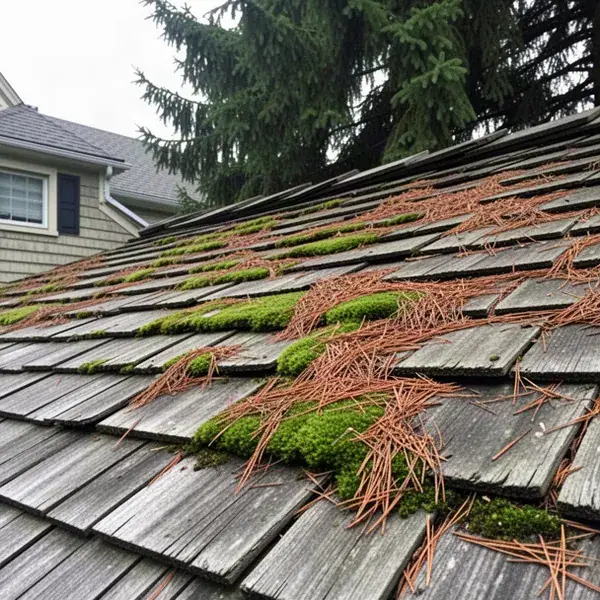
Debris is cedar's biggest enemy. Needles and leaves packed into keyways and valleys hold water against the wood, so these areas should be cleared at least once a year, usually in late fall.

Moss and lichen lift the butts and trap moisture, but high-pressure washing shreds the soft wood fibres. Gentle low-pressure roof cleaning followed by a breathable preservative every few years is the safer routine.

Trimming overhanging branches lets the roof dry faster after rain. A quick look each spring for split, cupped or missing pieces catches small repairs before they become leaks.

Moss on cedar shingles before cleaning in Burlington

Cedar Alternatives

Synthetic shakes made from polymer or recycled rubber copy the look of cedar without treatment or rot. Options include DaVinci Roofscapes and Brava polymer shakes and Euroshield rubber shakes made in Alberta, each with its own colour range and fire rating.

Premium architectural shingles such as CertainTeed Presidential Shake, GAF Grand Sequoia and IKO Armourshake give a shake-like profile at a lower price. They read as asphalt up close but suit owners who want the outline of cedar with shingle upkeep.

For a natural roof with a far longer life and very little maintenance, slate roofing is the other premium option, though the framing must be able to carry its weight.

Cedar Roof Cost

Around Burlington and the surrounding Halton and Hamilton area, most cedar roofs fall in roughly the $14 to $25 per square foot range installed. On a typical detached home, that often means about $35,000 to $70,000, depending on size and complexity.

The main drivers are listed here, and a written quote follows an on-site assessment.

  • Grade and type: Premium shakes and Number 1 shingles cost more than lower grades
  • Preservative or fire-retardant treatment
  • Roof pitch, height and the number of valleys, dormers and chimneys
  • Tear-off, plus re-sheathing if the old roof sits on spaced boards
  • Copper or prefinished steel flashings and ventilation upgrades

Cedar Roof FAQs

How long does a cedar shake roof last in Ontario?

A well-installed cedar shake roof that is cleaned and treated regularly typically lasts about 25 to 35 years here. Neglected roofs, especially under trees or over poorly vented attics, can fail in 15 to 20 years. Thicker shakes generally outlast thinner sawn shingles.

Is cedar allowed on heritage homes in Burlington?

Cedar is often the preferred material on heritage houses because it matches what many of them originally had. Designated properties, and those in the Burlington Avenue and Ontario Street Heritage Conservation District, may still need a heritage permit before the roof is changed. Our guide to heritage and permit rules explains how to check with the City first.

Does a cedar roof affect home insurance?

It can, because some insurers rate wood roofs differently from asphalt or metal when setting premiums or eligibility. Fire-retardant treated cedar may help, but policies vary. Ask your insurer before choosing cedar so there are no surprises at renewal.

Request a quote

Discuss Your Cedar Roof Project

Whether you are restoring an existing wood roof or planning a new one, we start by identifying what is on the roof now, checking the deck and attic, and talking through grade, treatment and upkeep. You receive a written quote that spells out the cedar grade, fasteners, underlayment and ventilation details.

Call us any time, or send your project details below.

Phones answered 24/7, including emergencies.

  1. 1We call you back to confirm the details.
  2. 2We inspect the roof and attic and take photos.
  3. 3You get a written scope and price. No pressure.
Call 289-816-1772Get a Quote