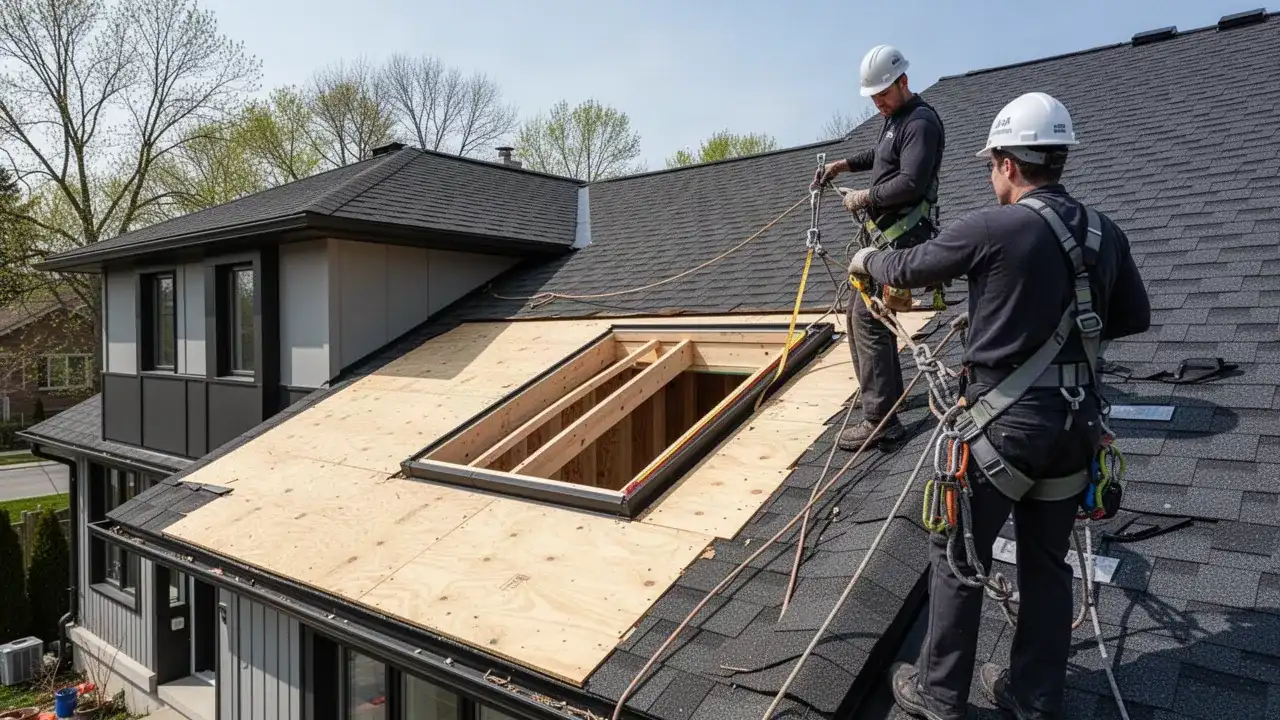
New skylight opening framed in Burlington roof renovation
Roofing guide

Do I Need a Permit to Replace My Roof in Burlington?

Do I need a permit to replace my roof? In Burlington the short answer is usually no: the City does not require a building permit to replace shingles with the same material on a roof that has fewer than three layers. Fixall Roofing re-roofs homes across Burlington, and homeowners planning a new roof ask us this more than any other question.

The answer changes once the job goes beyond new shingles. Structural repairs, a different roofing material, a third layer, new skylights or dormers, roof-mounted solar panels and heritage properties all bring extra rules into play.

This guide explains each case using the City of Burlington's own published rules and the Ontario Building Code, then compares the neighbouring municipalities we work in. Rules change, so treat it as a starting point and confirm your project with the City before work begins.

  • 15+ years experience
  • 700+ jobs completed
  • Fully insured + WSIB
  • Working at Heights certified
  • 1-year labour warranty
  • Open 24/7

The Short Answer from the City of Burlington

The City's page titled Do I need a building permit, on burlington.ca, lists the projects that are exempt. Roofing appears once on that list: replacing shingles with the same material, as long as the roof has less than three layers of shingles.

The same page states that construction related to a building otherwise needs a permit unless it appears on the exemption list. In practice, a standard asphalt roof replacement, shingles off and shingles on, needs no permit from the City.

If you are unsure, the City's building permit staff can be reached through Service Burlington. A two-minute question before work starts is far cheaper than an order to stop halfway through.

  • Same material, fewer than three layers: no building permit
  • Different material or a third layer: outside the exemption, ask the City
  • Structural, skylight, dormer or roof-mounted solar work: plan on a permit
  • Designated heritage property: a heritage permit may apply even when a building permit does not

When a Roofing Permit Is Required

Because Burlington's exemption is written narrowly, anything beyond a like-for-like shingle job deserves a call to the City. These are the situations we see most often.

Structural Changes to Rafters, Trusses or Decking

Sistering cracked rafters, adding collar ties, repairing trusses or raising a roof are structural work, and they need a permit, often with an engineer's or designer's drawings. If a sagging ridge calls for structural reinforcement, the permit becomes part of the schedule.

Swapping a few soft boards during a re-roof is routine, but a full roof deck replacement is not mentioned in the exemption, so confirm it with the City. Hamilton, for comparison, lists repairs to roof sheathing among the jobs that need a permit.

A Third Layer or Changing Roofing Material

The exemption covers the same material on a roof with fewer than three layers. Adding a third layer, or switching from asphalt to steel, cedar or a membrane system, falls outside that wording.

Confirm with the City before work begins, since a material change can affect roof loads and the fastening and underlayment details the code requires.

New Skylights, Dormers or Roof Openings

Cutting a new skylight or adding a dormer means cutting rafters or trusses and framing a new opening, so a building permit is usually required. Replacing a skylight in the same opening is a different job and is worth confirming separately.

Roof-mounted solar is also outside the exemption, which only covers small solar collectors that are not mounted to a building.

One more case catches homeowners out. Burlington exempts small decks and on-grade patios only when they are uncovered, so adding a new roof over a deck, patio or porch is outside the exemption and needs a permit.

Heritage Properties in Burlington

Heritage rules run separately from the building permit. A home can be exempt from a building permit and still need a heritage permit.

On March 2, 2026, City Council passed By-law 08-2026, designating the Burlington Avenue-Ontario Street Heritage Conservation District downtown and adopting its district plan. The area was studied first as a heritage study area of about 33 properties with 19th and early 20th century homes, so if you own one, read the plan or ask the City's heritage planning staff what roof work it allows before choosing materials.

Elsewhere, the City's Municipal Heritage Register lists both designated and non-designated properties. Owners of designated properties need an approved heritage permit for changes that could affect protected heritage features, and the City notes processing can take up to 90 days.

Non-designated listed properties face no restrictions on alterations, only a 60-day notice requirement before demolition. Under provincial changes to the Ontario Heritage Act, properties listed before 2023 must receive a notice of intention to designate by January 1, 2027 or be removed from the register, so the status of some listed Burlington homes may change around that date.

Not sure whether your home is on the list? The City publishes its Municipal Cultural Heritage Register online, and heritage planning staff can confirm a property's status by email before you sign a roofing contract.
Ontario Building Code Basics for Roofing

Ontario's current Building Code, Ontario Regulation 163/24, took effect on January 1, 2025 and replaced the 2012 code, Ontario Regulation 332/12. House roofs fall under Part 9, with roofing requirements in Section 9.26 and attic ventilation in Section 9.19.

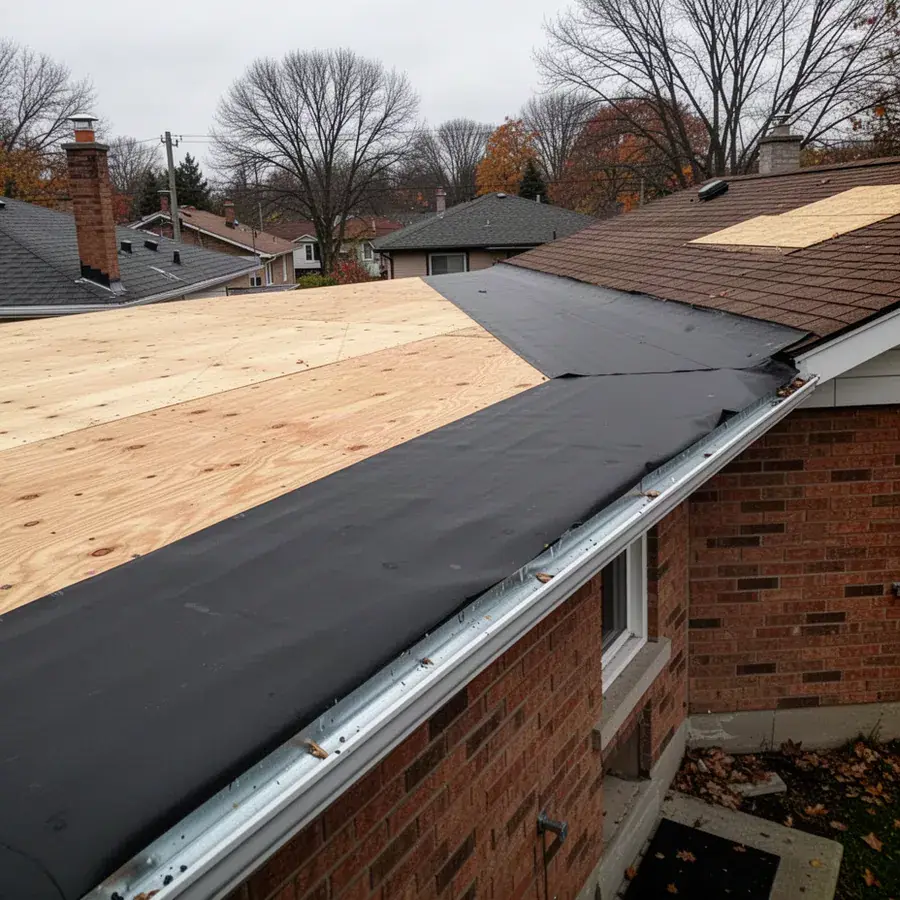
Eave protection is the rule most often missed on cheap re-roofs. On shingle roofs it must extend from the edge of the roof a minimum of 900 mm up the slope and reach at least 300 mm past the inside face of the exterior wall, which is why we use a self-adhered membrane such as Grace Ice & Water Shield at the eaves.

Roof spaces above insulated ceilings need vents with an unobstructed area of at least 1/300 of the insulated ceiling area, split between low intake and high exhaust. Flashing is required wherever the roof meets a wall, chimney or another roof plane, which in practice means step and counter-flashing rather than a bead of caulking.

Even when no permit is needed, building to these standards is what protects you on resale and with your insurer. The regulation itself is published on the Province's e-Laws website.

Ice and water membrane at eaves of Burlington roof

Permits in Neighbouring Towns

Burlington's rule is not universal, and every municipality publishes its own list. Here is where to apply in the other municipalities we serve, based on each municipality's published guidance as of 2026.

AreaPermit authoritySame-material re-shingling
BurlingtonCity of BurlingtonNo permit if fewer than three layers
OakvilleTown of OakvilleListed as not needing a permit
MiltonTown of MiltonConfirm with the Town
Hamilton, Waterdown, Dundas, Ancaster, Stoney CreekCity of Hamilton Building DivisionNo permit for same material; sheathing repairs need one
Grimsby (Niagara Region)Town of Grimsby Building DivisionConfirm with the Town
Mississauga (Peel Region)City of Mississauga Building DivisionNo permit; skylights and slope changes need one

Heritage rules also differ by town. Hamilton and Mississauga both generally allow re-roofing in the same material without heritage approval, while a change of roofing material on a designated property needs a heritage permit.

Who Pulls the Permit: You or Your Roofer?

Ontario permits are issued for the property, and the owner is ultimately responsible for making sure required permits are in place. A contractor or designer can apply as the owner's agent with written authorization, and many structural jobs need a qualified designer's drawings either way.

Our practice is simple. We tell you at the quote stage whether your scope is likely to need a permit or a heritage approval, we build that step into the schedule, and we do not start permit-dependent work until the permit is issued.

Whoever you hire, put the answer in writing. The contract should say who applies, who pays the fee and who books the inspections.

Permit FAQs

Can I put new shingles over old ones in Burlington?

The City's exemption applies as long as the roof has fewer than three layers, so one new layer over a single old layer needs no permit. We rarely recommend it, because an overlay hides soft decking, adds weight, traps heat that shortens shingle life and can limit some manufacturer warranty options.

What happens if roof work is done without a required permit?

The City can issue an order to stop work or to open up finished work for inspection, and the Building Code Act allows fines. Unpermitted structural work can also surface at resale, when a buyer's lawyer searches for open work orders or a home inspector questions an undocumented skylight or dormer.

Request a quote

Ask Us Before You Start

Not sure whether your roof project needs a permit? Describe the work and we will tell you what we know about the rules where you live, then confirm with the municipality before quoting anything that could need approval.

If you are ready for an inspection, we will assess the roof, deck and framing and give you a written quote that spells out any permit steps.

Phones answered 24/7, including emergencies.

  1. 1We call you back to confirm the details.
  2. 2We inspect the roof and attic and take photos.
  3. 3You get a written scope and price. No pressure.
Call 289-816-1772Get a Quote