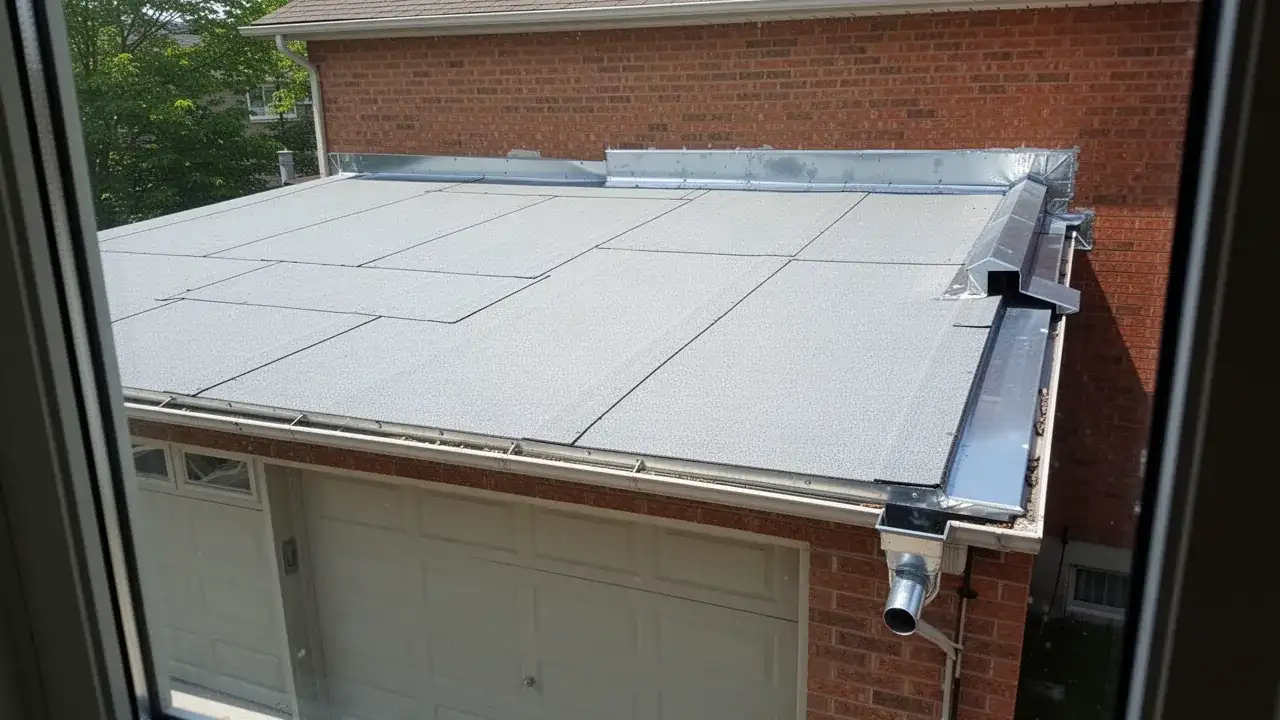
New two ply SBS flat roof on Burlington garage
Residential roofing

Flat Roof Installation and Repair in Burlington, ON

Flat roofing on Burlington homes usually means the roof over an attached garage, a rear addition, a porch or the low-slope section behind a dormer, and those small roofs leak more often than the main roof above them. Our Burlington crews at Fixall Roofing install, replace and repair flat and low-slope roofing on houses across the city and nearby towns.

We work with two-ply SBS modified bitumen, self-adhered SBS, EPDM and TPO, and we pick the membrane to suit the roof, not the other way around. Flat roof repair in Burlington is a big share of our work, from split seams and lifted flashings to rotted decks under years of ponding water.

This page is written for homeowners. Larger flat roofs on plazas and industrial buildings are handled by our commercial roofing division.

  • 15+ years experience
  • 700+ jobs completed
  • Fully insured + WSIB
  • Working at Heights certified
  • 1-year labour warranty
  • Open 24/7

Flat Roofing Services for Burlington Homes

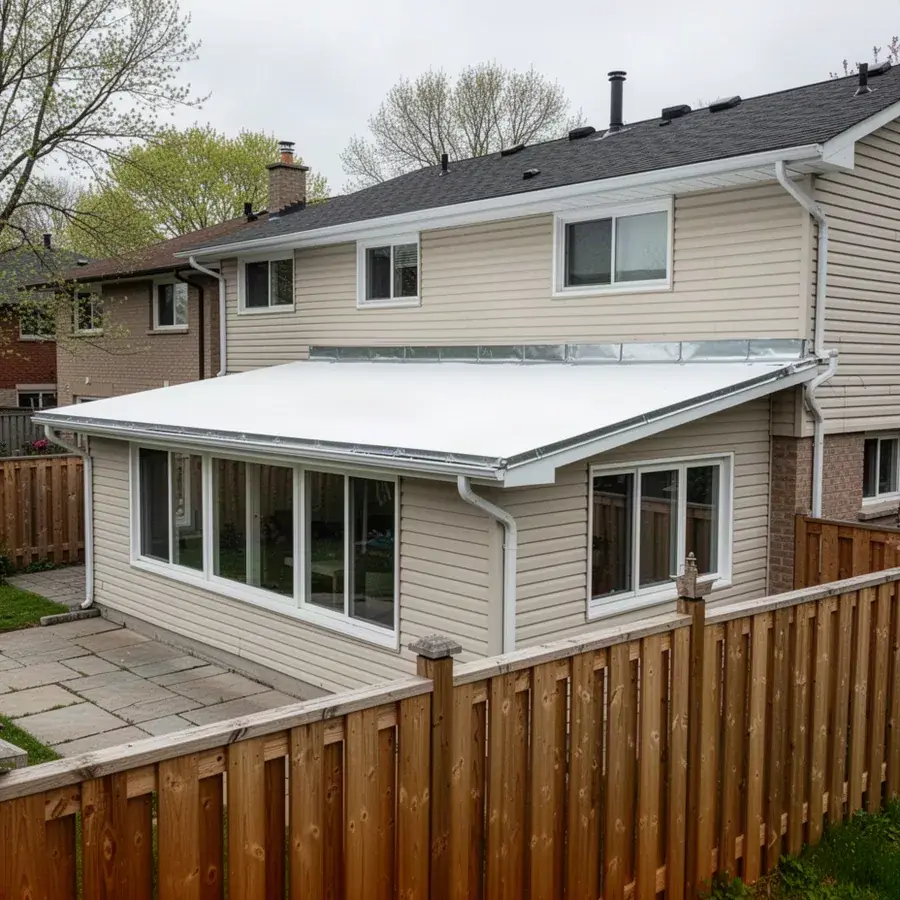
Low-slope roofing shows up on more Burlington houses than people expect. Common spots are attached garages on 1960s and 1970s side-splits, kitchen and family room additions, porch and sunroom roofs, shed dormers, and the flat-roofed modern infill homes going up in older neighbourhoods.

Our flat roof work covers four kinds of jobs. Most homeowners call us for a repair and learn the real problem is drainage, which is why we check slope on every visit.

  • New installs on additions, garages and custom homes
  • Replacement of worn SBS, EPDM, roll roofing and tar and gravel roofs
  • Repair of blisters, seams, flashings, drains and punctures
  • Drainage correction with tapered insulation, crickets, scuppers and new drains
Flat roof rear addition on Burlington side split

Flat Roof Membranes Compared

No single membrane is best for every low-slope roof. The right choice depends on what the roof touches, how it drains, whether anyone walks on it and how close it sits to wood walls.

MembraneTypical life and costRepairabilityBest use
2-ply SBS torch-onAbout 20 to 30 years, mid to high costVery good, patches bond wellGarages and additions clear of wood walls
Self-adhered SBSAbout 20 to 25 years, mid to high costGoodRoofs beside siding, decks and wood framing
EPDMAbout 20 to 30 years, mid costGood with primer and seam tapeSimple roofs with few penetrations
TPOAbout 20 to 25 years, mid costGood if welded while the sheet is still cleanSunny roofs where a white surface helps
Tar and gravel (BUR)About 15 to 25 years, now rarely installedHard to patch neatlyOlder roofs, usually replaced rather than repaired

For SBS we use two-ply systems from Soprema and IKO, a base sheet plus a granulated cap that resists sun and foot traffic. Self-adhered versions such as Soprema's Colphene line bond without an open flame.

For single-ply roofs we install EPDM such as Carlisle Sure-Seal or Holcim Elevate RubberGard, and TPO such as Carlisle Sure-Weld or GAF EverGuard. Larger installs of rubber membrane on commercial buildings are covered on our EPDM roofing page.

Torch-On Roofing and Fire Safety

Torch on roofing heats the back of an SBS sheet with a propane torch until it melts and fuses to the layer below. Done well, it creates one of the toughest seams in residential roofing, and done carelessly, it is a leading cause of roofing fires.

Torching is appropriate across the open field of a roof over a non-combustible or protected base. It is the wrong tool near wood fascia, vented soffits, cedar or vinyl siding, and any gap where flame or heat can reach hidden framing.

On those edges we switch to self-adhered or cold-applied sheets, even when the rest of the roof is torched. After the last torch is shut off, a crew member stays on fire watch for at least an hour, checking edges and wall junctions with a fire extinguisher at hand.

Drainage, Ponding and Slope

A flat roof is never truly flat. Most membrane makers want a slope of at least 1/4 inch per foot toward a drain, scupper or edge, and many older garage roofs in Burlington were framed with much less.

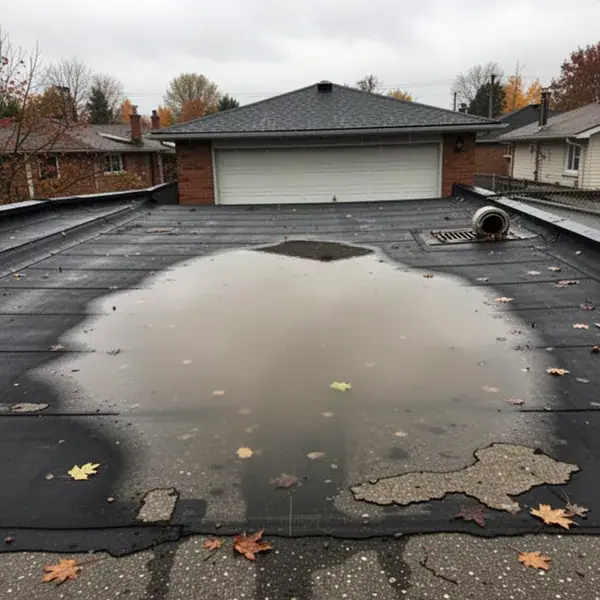
Water still sitting 48 hours after rain is called ponding, and it is a warning sign. It speeds up membrane ageing, adds weight to the deck, and freezes into ice that pulls at seams through the winter.

Flat roof drainage is fixed by building slope back in. We use tapered insulation boards to create fall, crickets to steer water away from walls and chimneys, and scuppers or new drains sized to empty the roof into the eavestrough system.

Ponding water on flat garage roof in Burlington

Flat Roof Repair

Most flat roof leaks trace back to one of three causes. The fix depends on the age and condition of the membrane around the problem, and on a sound membrane, flat roof coatings can sometimes add years once the repairs are made.

Blisters and Split Seams

Blisters form when trapped moisture or air between plies expands in the sun. A few small blisters can be cut, dried and patched, but blisters spread across the roof usually mean wet layers underneath and a replacement.

Seams split as membranes age and shrink, especially on older EPDM glued with liquid adhesive. We clean, prime and re-seal with modern seam tape or cover the seam with a reinforced strip.

Ponding Water and Low Spots

Low spots come from either poor original slope or a deck that has sagged, often because joists were undersized or sheathing has rotted. Patching the membrane in a puddle does not solve anything.

We correct the cause first, adding tapered insulation or a cricket for slope problems, or carrying out deck replacement and joist repairs where the wood has failed.

Flashing at Walls and Parapets

On houses, most flat roof leaks start where the roof meets a wall. Base flashing should run at least 200 mm up the wall, sit behind the siding or stucco, and be covered by a counterflashing or termination bar.

Many older garage roofs were finished with membrane barely turned up the wall and sealed with roofing cement. We rebuild these junctions properly, removing siding where needed so the flashing laps the right way.

Replacing an Old Tar and Gravel Roof

A tar and gravel roof is a built-up roof made from layers of felt and hot asphalt, topped with loose gravel. Many lasted decades, but by now most are brittle and the gravel hides cracks until water reaches the ceiling.

Removal is heavy work, because the gravel alone can weigh roughly 400 pounds per 100 square feet and must be scraped and bagged before the plies come off. Older roofing felts, mastics and flashing cements can contain asbestos, so suspect materials should be tested before removal under Ontario Regulation 278/05.

Once the deck is exposed and repaired, we usually replace a tar and gravel roof with two-ply SBS or a single-ply membrane over new tapered insulation. The finished roof is far lighter and drains better than the one it replaces.

Flat Roof Installation Process

A new flat roof usually takes one to three days on a typical garage or addition, depending on tear-off, deck work and weather.

  1. Inspection and Moisture Check

    We inspect the membrane, flashings and drains, check the ceiling below for stains, and probe for wet insulation.

  2. Deck Check and Repair

    After tear-off, soft or delaminated sheathing is cut out and replaced, and we note any joist damage before going further.

  3. Insulation and Slope

    Tapered boards and crickets set the fall toward drains or scuppers, and they add insulation value over heated rooms.

  4. Membrane Installation

    The base and cap sheets or single-ply membrane go down with staggered laps, using self-adhered sheets near combustible walls.

  5. Flashing and Edges

    Wall flashings, curbs, pipe penetrations and metal edge trims are completed and tied into the siding or masonry.

  6. Drainage Test

    We run water across the finished roof to confirm it reaches the drains, then clean the site and send you photos.

Flat Roof Costs

Around Burlington, Hamilton and Halton, most residential flat roof replacements fall in roughly the $12 to $22 per square foot range. Small roofs cost more per foot because setup, safety and disposal are spread over less area, so a single-car garage roof often lands around $4,500 to $9,000.

These general ranges by membrane assume a straightforward tear-off. A written quote follows an on-site assessment.

  • EPDM: roughly $11 to $18 per square foot
  • TPO: roughly $12 to $19 per square foot
  • 2-ply SBS, torched or self-adhered: roughly $13 to $22 per square foot
  • Extra cost drivers: gravel removal, deck and joist repairs, tapered insulation, wall flashings that need siding removed, and carrying materials through a back yard

Flat Roof FAQs

How long does a flat roof last?

Two-ply SBS and EPDM usually last about 20 to 30 years, and TPO about 20 to 25 years on a house. Clearing drains, removing debris and fixing small flashing problems each year keeps a membrane at the top of that range. Roofs that pond water or never get looked at often fail 5 to 10 years early.

Can I walk on my flat roof?

Occasional careful walking is fine on most membranes, but EPDM and TPO puncture easily under tools, stones or furniture legs. Granulated SBS handles foot traffic best. If you need regular access to an air conditioner or skylight, we add walkway pads along the route.

Can a flat roof become a deck?

Often yes, but the framing must be checked for the weight of people, furniture and snow, and a building permit is usually required. The roof also needs a walkable waterproofing system with a protected wear surface, plus careful tie-ins at door sills and walls. Our roof sealing and waterproofing page explains the liquid-applied membranes used for decks over living space.

Request a quote

Get a Flat Roof Quote

Send us a few photos of the roof and any ceiling stains, or book a visit. We check the membrane, flashings, slope and deck, then provide a written quote that names the membrane system and explains any drainage changes.

We answer calls 24/7, and leaks that are coming through now get priority scheduling.

Phones answered 24/7, including emergencies.

  1. 1We call you back to confirm the details.
  2. 2We inspect the roof and attic and take photos.
  3. 3You get a written scope and price. No pressure.
Call 289-816-1772Get a Quote