Many metal roofs in Halton were installed over 1x4 strapping on top of old shingles or bare rafters. That leaves an air gap that amplifies rain, and it is the most common reason owners call us about noise.
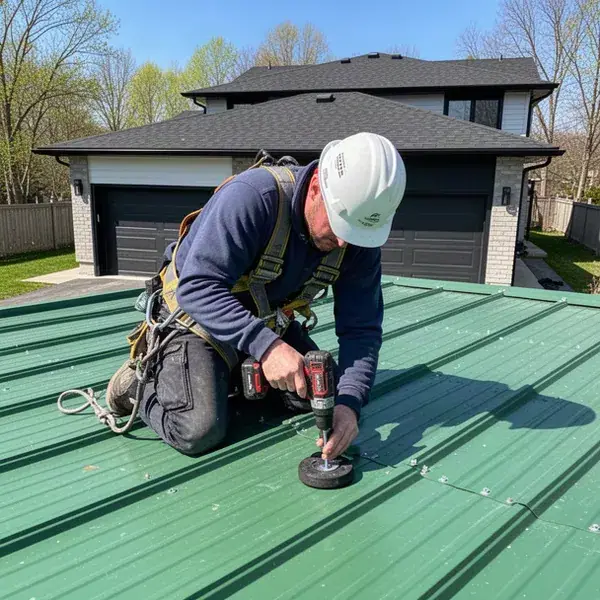
Our first step is fastener work. The rubber washers on exposed screws break down in UV after many years, so we replace loose or stripped fasteners with slightly oversized screws and new EPDM washers, which stops rattling and closes small leak points at the same time.
Next we check the foam closure strips at the eaves and ridge. Missing closures let wind flutter the panel ends and let birds and wasps in, so we install profile-matched closures and seal them with butyl tape.
Ticking from expansion is harder to cure on exposed-fastener panels, because the screws pin the steel in place. We can reduce it by correcting over-driven or misaligned fasteners, but standing seam panels on floating clips are the long-term answer if ticking is the main complaint.
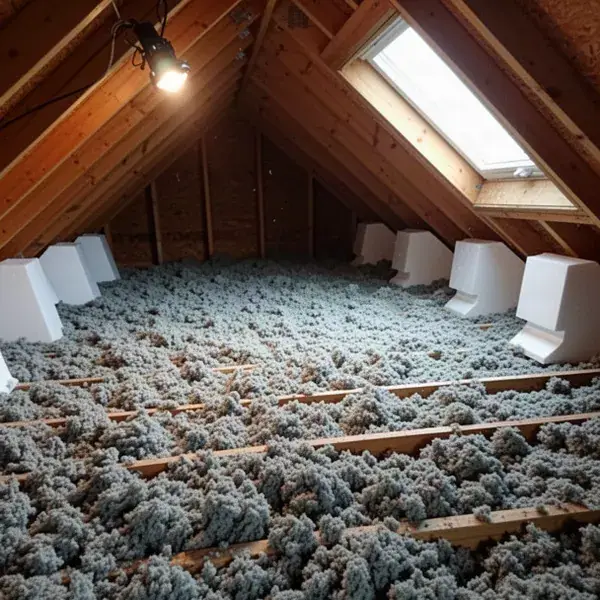
Finally, we add mass from inside the attic. Where there is no attic, such as a vaulted ceiling, the realistic options are limited to the roof side, and we will tell you if replacing the panels over a solid deck is the only way to get a meaningful change.