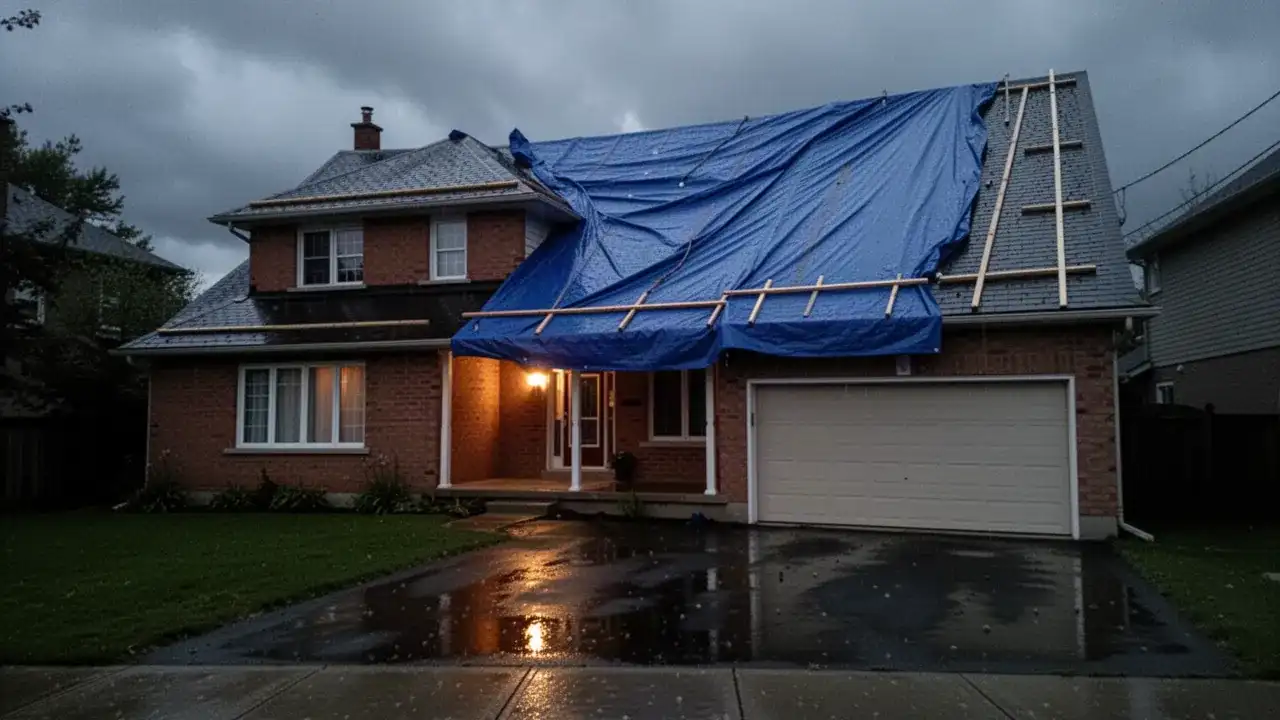
Blue emergency tarp secured on Burlington roof at dusk
Residential roofing

24/7 Emergency Roof Repair in Burlington, ON

Water dripping through a ceiling in the middle of the night, or shingles torn away with more rain on the forecast, is exactly what emergency roof repair in Burlington is for. Fixall Roofing is a Burlington roofer, and on an emergency visit our first job is to stop more water from getting in.

The hardest part of a roof emergency is not knowing how bad it is. On arrival we find where the water is entering, tarp or seal it, and tell you what can wait for daylight and what cannot.

Calls come from homeowners, landlords and commercial property owners after wind storms, fallen branches, ice dam leaks and sudden flat roof failures. A temporary fix buys you time, and we explain plainly what the permanent repair will involve.

  • 15+ years experience
  • 700+ jobs completed
  • Fully insured + WSIB
  • Working at Heights certified
  • 1-year labour warranty
  • Open 24/7

Emergency Roof Repair Services, Day or Night

An emergency visit has one goal: make the roof watertight enough to protect the inside of the building until a proper repair can be done in safe conditions. That usually means tarping, temporary sealing or clearing debris, not a full repair in the dark.

If you are searching for emergency roof repair near me with water coming in, the steps below are what our crew does on arrival. We tell you honestly on site what is temporary and what will need to come back for permanent work.

  • Emergency tarping over torn shingles, exposed deck or impact damage
  • Temporary sealing of lifted flashing, split vent boots and small openings with membrane or roofing sealant
  • Debris removal of branches and loose material that are still damaging the roof
  • Interior check in the attic to see where water is pooling and whether insulation is soaked
  • Follow-up permanent repair, scheduled once the weather allows

What Counts as a Roofing Emergency

Call our 24/7 line straight away for any of the situations below. Each one gets worse with every hour of rain or melt.

  • Water actively dripping or running into living space
  • Shingles torn off by wind with more rain or snow in the forecast
  • A fallen tree or large branch resting on or through the roof
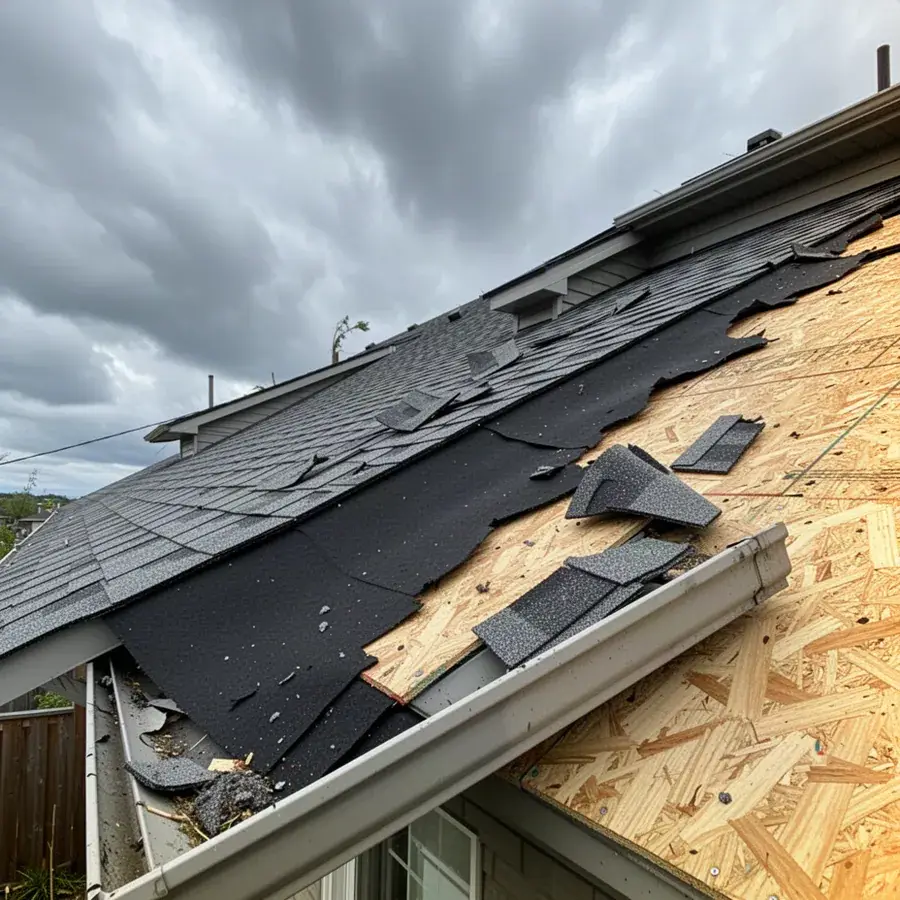
  • Exposed roof deck or underlayment after a storm
  • Ice dam meltwater coming through ceilings or around windows in winter
Storm torn shingles exposing deck on Burlington roof

A few missing shingles on a dry week, an old dry stain or granules in the eavestrough can usually wait for a regular weekday appointment. Ice dam leaks need the ice dealt with as well as the roof, and safe ice dam removal means melting channels with steam rather than chipping with hammers that cut shingles.

What to Do Before Our Crew Arrives

Your safety comes before the house. Never go onto a roof in wind, rain, ice or darkness, and leave fallen trees near power lines to your hydro utility.

Keep People Away from Wet Ceilings and Electrical

If water is near light fixtures, outlets or a panel, switch off the affected circuits at the breaker only if you can reach it while standing on a dry floor. Otherwise keep everyone out of the room.

A sagging or bulging ceiling is holding water and can collapse without warning. Keep children and pets out from under it.

Contain the Water

Put buckets or bins under drips and lay towels to stop water spreading across floors. If a ceiling is bulging, a small hole made with a screwdriver at the lowest point lets it drain into a bucket in a controlled way.

Move furniture, electronics, rugs and documents out of the room, and lift what you cannot move onto blocks or plastic.

Photograph Everything for Insurance

Take photos and video of interior damage, the ceiling, wet flooring and anything ruined, then photos of the roof and yard from the ground. Your phone's timestamps help show the damage happened during the event.

Keep damaged items until your insurer says you can discard them, and keep receipts for anything you buy to protect the house.

How Emergency Roof Tarping Works

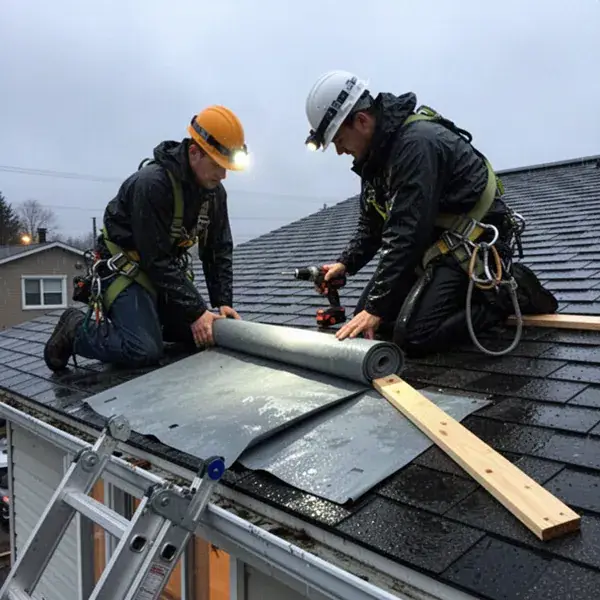
A roof tarp only works if water cannot get under its top edge. We use a heavy-duty reinforced tarp sized to run from below the damaged area, up and over the ridge, and down the other side, so water sheds over the tarp rather than behind it.

The tarp edges are rolled around wood battens, and the battens are fastened where they do the least harm, at the ridge, into areas already damaged, or into spots that will be reshingled anyway. Nailing a tarp straight through sound shingles creates dozens of new holes, which is the most common mistake we see on do-it-yourself and storm-chaser tarps.

On exposed deck we often apply self-adhered membrane before the tarp goes on, which gives a second layer of protection if wind works the tarp loose. A properly anchored emergency roof tarp is meant to hold for weeks while the permanent repair is scheduled, not for a whole season.
Roofers fastening emergency roof tarp with battens in Burlington

From Temporary Fix to Permanent Repair

An emergency call is the start of the job, not the end of it. Every emergency visit moves through the same stages so you always know what comes next.

  • Emergency visit: stop the water with tarping or temporary sealing and check the attic.
  • Photo report: dated photos of the damage and the temporary work, sent to you after the visit.
  • Insurance documentation: a written description of the cause and scope if you are making a claim.
  • Permanent repair or replacement: scheduled in dry, daylight conditions and quoted in writing first.

If the source of the water was not obvious during the emergency visit, our leak detection and repair process traces it properly once the roof is dry and safe to test.

Emergency Rates and Response Times

After-hours, weekend and storm-night work generally costs more than a scheduled weekday repair, because a crew and materials are called out at short notice. We explain the call-out and tarping cost on the phone before a crew is sent, so you can decide with the numbers in front of you.

As a general estimate for this area, emergency tarping commonly runs from several hundred dollars for a small section to $1,500 or more for a large, steep or high roof. The permanent repair is priced separately once the damage can be properly assessed.

Response time depends on where you are, the weather and how many calls arrive during the same storm. We give you a realistic arrival estimate when you call, and if high wind makes the roof unsafe to climb, we tell you that rather than sending a crew into danger.

Working with Your Insurer After an Emergency

Most home insurance policies expect you to take reasonable steps to prevent further damage, and emergency tarping is usually part of that. Report the damage to your insurer promptly and keep our invoice and photo report with your claim.

If wind, hail or a falling tree caused the problem, our storm and hail damage service covers adjuster meetings and claim documentation in full.

Emergency Roof Repair FAQs

Can you tarp a roof in rain or snow?

Yes, we tarp in rain and light snow, using fall protection and extra care on slippery surfaces. Strong wind, lightning or ice can make a roof unsafe to access, and in that case we focus on interior protection until conditions allow.

How long can a tarp stay on a roof?

Think weeks, not months. Sunlight breaks down tarp material and wind gradually loosens the edges, so the permanent repair should be booked as soon as the weather and insurance approval allow.

Do you charge more for after-hours calls?

After-hours emergency work is typically priced higher than a scheduled daytime visit because a crew is called out at short notice. We tell you the cost on the phone before dispatching anyone, and the permanent repair is quoted separately in writing.

Request a quote

Call Now for Emergency Roof Repair

Water coming in, or roof open to the sky? Phone +1 289-816-1772 at any hour, including weekends and holidays. Have the address, where the water is showing and a rough description of the damage ready.

For problems that can wait for a daytime appointment, reach us through the contact page instead.

Phones answered 24/7, including emergencies.

  1. 1We call you back to confirm the details.
  2. 2We inspect the roof and attic and take photos.
  3. 3You get a written scope and price. No pressure.
Call 289-816-1772Get a Quote