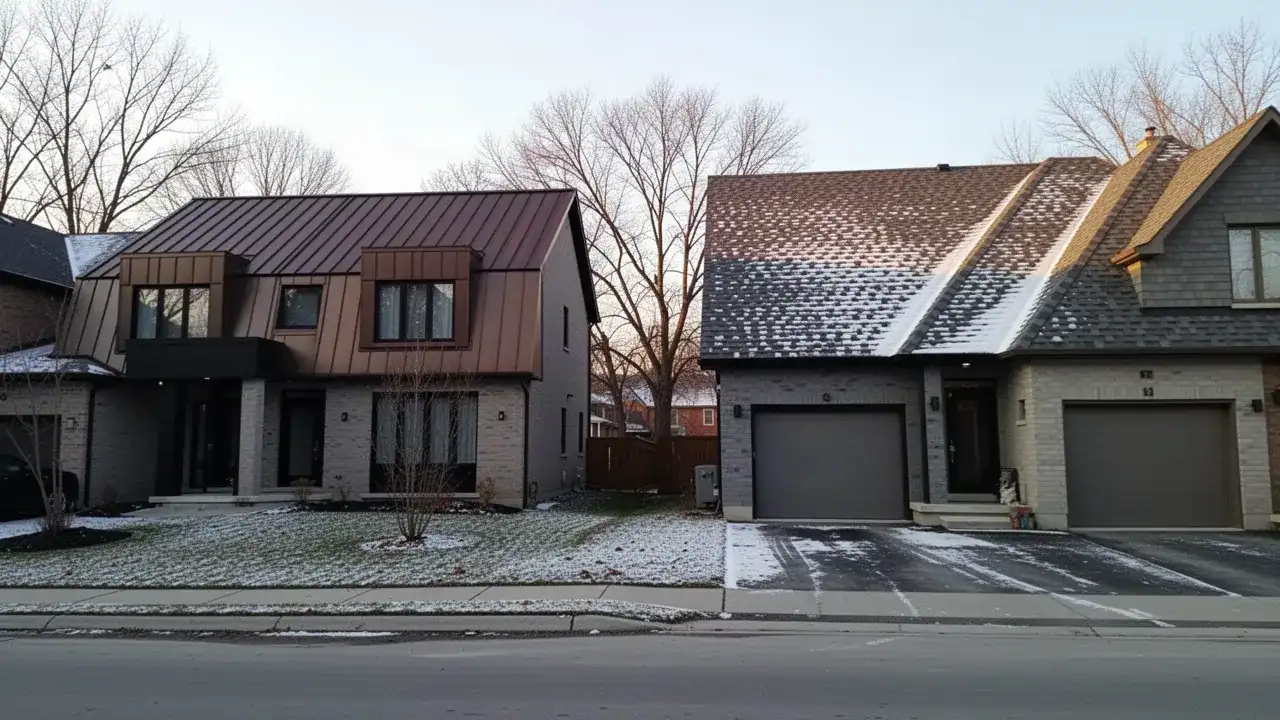
Steel roof beside asphalt shingle roof in Burlington
Roofing guide

Metal Roof vs Shingles for Burlington Homes

Metal roof vs shingles is the material question Burlington homeowners ask us most, and Fixall Roofing installs both, so we have no reason to steer you toward one. This guide compares asphalt and steel on cost, lifespan, winter performance, noise and resale for homes from the lakeshore up to the escarpment.

We replace worn shingles, install steel and repair both on homes across Halton and Hamilton, so this comparison comes from roofs we have opened up rather than from sales brochures. The short version of asphalt vs metal roof: steel wins on lifespan and snow shedding, asphalt wins on upfront cost and ease of repair, and the right choice depends mostly on how long you plan to stay.

  • 15+ years experience
  • 700+ jobs completed
  • Fully insured + WSIB
  • Working at Heights certified
  • 1-year labour warranty
  • Open 24/7

Metal vs Asphalt at a Glance

This table compares architectural asphalt shingles with residential steel, either standing seam or metal shingle panels. Figures are typical for Ontario conditions, not guarantees for any one roof.

FactorArchitectural AsphaltSteel Roofing
Upfront costLower, the baselineRoughly 2 to 3 times asphalt
LifespanAbout 20 to 30 yearsAbout 40 to 70 years
MaintenanceOccasional shingle and flashing repairsFastener checks on exposed-screw panels
WindRated to 110 or 150 mph testsHigh uplift ratings with correct clip spacing
Snow sheddingHolds snowSheds quickly, needs snow guards
NoiseQuietSimilar over a solid deck
LookTraditional, wide colour rangeModern seams or shingle profiles
ResaleWhat most buyers expectAppeals to some buyers, value gain varies

Neither material is a bad choice when it is installed well. Most failures we see on either roof come from flashing, ventilation and fastening shortcuts, not the material itself, which is why asphalt shingle roofing from major brands such as GAF, Owens Corning, IKO or BP Canada can outperform a poorly installed steel roof.

Upfront Cost vs Lifetime Cost

Steel costs more on day one because the material is pricier and the work is slower, with custom flashings bent for every hip, valley and wall. Standing seam with concealed clips sits at the top of the price range, while exposed-fastener panels and steel shingles fall in between.

Lifetime cost tells a different story. As a simple illustration, a roof costing $15,000 that lasts 25 years works out to $600 a year, while a $36,000 steel roof lasting 60 years works out to $600 a year as well, before counting the second tear-off and disposal the asphalt roof will eventually need.

The catch is that you only collect metal's value if you own the home long enough to use it. If you plan to sell within about 10 years, a new asphalt roof replacement usually returns more of its cost at sale, and the next owner gets a roof with plenty of life left.

Repair costs differ too. A few wind-damaged shingles are a quick, inexpensive fix with matching bundles still on the market, while a dented or creased steel panel usually has to be replaced end to end, and an exact colour match can be harder to find years later.
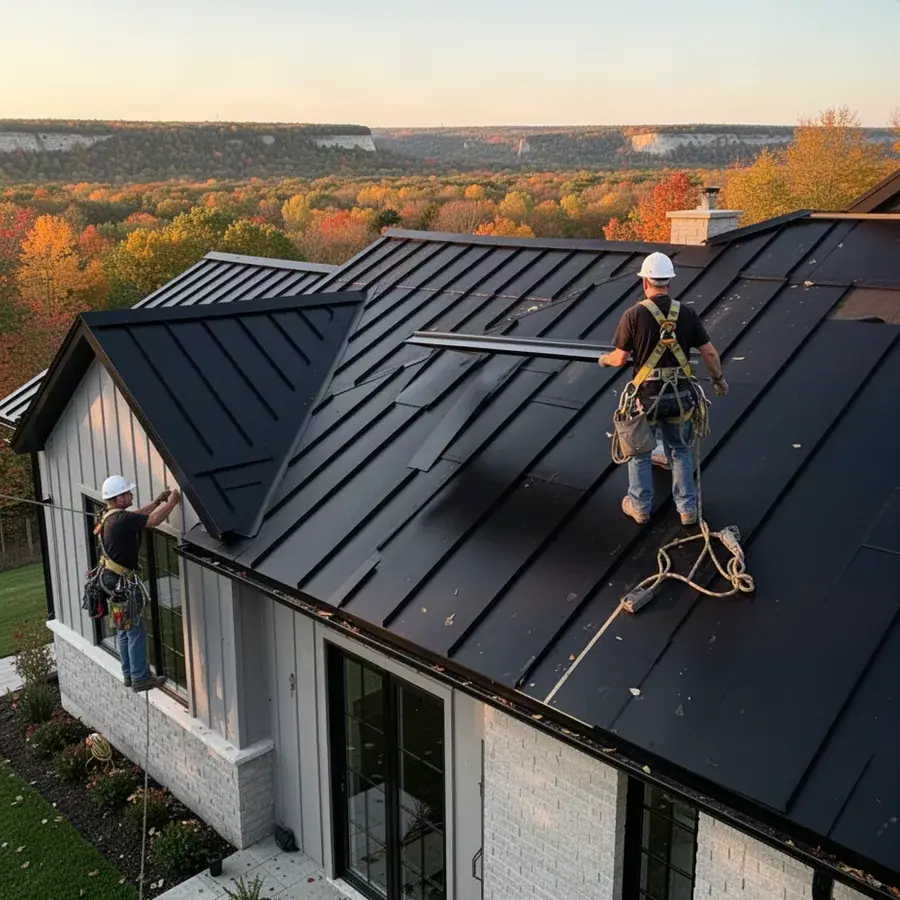
Standing seam metal roof installation in progress near Burlington

Performance in Lake Wind, Snow and Ice

Burlington roofs deal with gusty wind off Lake Ontario, wet lake-effect snow and frequent freeze-thaw cycles. Each material handles them differently.

Wind Off the Lake

Quality architectural shingles are tested to ASTM D3161 Class F (110 mph) or ASTM D7158 Class H (150 mph), but only perform that way with the high-wind nailing pattern and a full seal. Shingles installed late in fall may not seal until spring warmth, which leaves them vulnerable to blow-offs through the windy months.

Standing seam on concealed clips resists uplift extremely well when clip spacing follows the manufacturer's engineering, with tighter spacing at edges and corners.

Snow Shedding

Steel sheds snow in large slides once the sun or attic warmth loosens it. That clears the roof, but it can bury walkways, crush eavestroughs and land on cars, so snow guards above doors, decks and driveways are standard practice.

Asphalt holds snow in place, which is safer below but leaves the load on the roof until it melts.

Ice Dams

Neither material is immune to ice dams, since they come from warm attics melting snow that then freezes over the cold overhang. Metal tends to shed before a dam builds, while shingles depend on a peel-and-stick eave membrane to keep backed-up meltwater out.

Either way, air sealing and ventilation fix the cause; the roofing only decides how the symptoms show up.

Are Metal Roofs Loud, Hot or a Lightning Risk?

These are the three worries we hear most often, and each has a clear answer.

Loud?

Steel over open strapping drums in heavy rain. Installed over a solid plywood or OSB deck with underlayment and an insulated attic, most people cannot tell it apart from shingles indoors.

Hot?

Steel reflects more sunlight than dark asphalt, especially in lighter colours or with reflective cool-roof paint, and it cools quickly after sunset. Attic temperature depends far more on ventilation than on the roofing material.

A Lightning Risk?

Metal roofs do not attract lightning, which strikes the highest point in an area regardless of material. In the rare case of a direct hit, a steel roof will not catch fire the way an asphalt roof can, and the energy spreads across the panels.

Installing Metal Over Old Shingles: Pros and Cons

Many steel roofs in Ontario go on over one existing layer of shingles, usually on wood strapping. It saves the tear-off and disposal cost and keeps the house closed up during the job.

The downsides are real. You lose the chance to inspect and replace soft or rotted deck boards, the strapping creates an air gap that adds rain noise and can trap condensation, and an uneven old roof can show through as wavy panels, a defect called oil canning that is most visible on standing seam.

Weight is rarely the deciding factor with one layer of shingles, since steel is light, but two existing layers should always come off. Ventilation also needs a new plan, because ridge and soffit airflow must reach the new roof surface rather than dead-ending at the old shingles.

Our metal roofing installs start with an attic inspection either way, so we can tell you whether going over is sound or a tear-off is the better investment. Burlington typically treats a straight material swap differently from work that alters the roof structure, which needs a permit, so ask the City which applies to your plan.

Which Choice Fits Which Burlington Home

Here is how the decision usually plays out for the homeowners we meet. Your own budget, roof shape and plans may tip it either way.

The Forever Home

If you plan to stay 20 years or more, steel's lifespan means you will likely never reroof again. Standing seam is the strongest long-term value, especially for homes that also want solar.

Selling Within Five Years

A new architectural shingle roof checks the box buyers and home inspectors look for at a much lower cost. You are unlikely to recover steel's premium in a short hold.

A Designated Heritage Home

If your home is designated under the Ontario Heritage Act, you may need a heritage permit from the City of Burlington before changing roofing materials. Some heritage homes suit standing seam or metal shingles that mimic original materials, but check with the City's heritage planning staff first.

Homes With Low-Slope Sections

Asphalt shingles are not suited to very shallow pitches and need extra underlayment on low slopes. Standing seam handles lower pitches than shingles, and near-flat porches or additions call for a membrane system instead.

You do not have to pick one material for the whole house. A common Burlington approach is an asphalt main roof with standing seam accents over a front porch, bay window or low-slope rear addition, which adds visual interest and puts steel where it performs best.

Whatever the plan, ask each contractor to quote the same scope: tear-off or overlay, underlayment type, ice and water coverage, ventilation and flashing details. Comparing quotes with different scopes is the most common way homeowners end up choosing on price alone.

Metal vs Shingles FAQs

Does a metal roof increase home value?

The evidence is mixed. Industry surveys report that metal roofs recover part of their cost at sale, but in a typical Burlington resale, buyers and appraisers focus mainly on roof age and condition, so a newer roof of either material helps.

Is steel roofing over shingles a good idea?

It can be, when there is only one existing layer, the deck is solid, the old roof is reasonably flat and ventilation is planned for the new surface. It is a poor idea over two layers, soft or leaking decking, or a roof with past ice dam damage that has not been opened up and repaired.

Request a quote

Get Quotes on Both Options

The easiest way to decide is to see both prices for your own roof side by side. When you book an estimate, we inspect the roof and attic and give you written quotes for asphalt and steel, with the trade-offs explained in plain language.

Whichever you choose, the work is done by our WSIB-covered, Working at Heights certified crew and is backed by our 1-year labour warranty, with material coverage from the roofing manufacturer.

Phones answered 24/7, including emergencies.

  1. 1We call you back to confirm the details.
  2. 2We inspect the roof and attic and take photos.
  3. 3You get a written scope and price. No pressure.
Call 289-816-1772Get a Quote